 EN
EN
 English
 Español
 русский
 简体中文
简体中文

Circuit Measurement Tools Factory
Home / Products
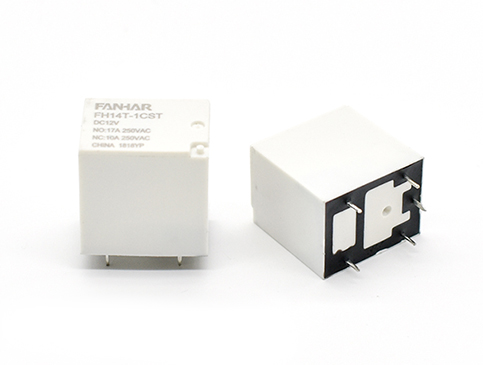
Zhejiang Fanhar Electronics Co., Ltd. is China Custom Electromechanical Components Manufacturers and Circuit Measurement Tools Factory, a national high-tech enterprise specializing in R&D, manufacturing, and sales of relays. Our products are widely applied in smart home systems, photovoltaic new energy, charging piles, smart meters, industrial control, and other fields.
Currently, we have a professional team of nearly 600 employees and operate 35 fully automated production lines, with 40% of our products exported to over 20 countries worldwide. To better serve our customers and meet market demands, we continuously improve our products and manufacturing technologies, investing 6%-8% of annual sales revenue in R&D and innovation.
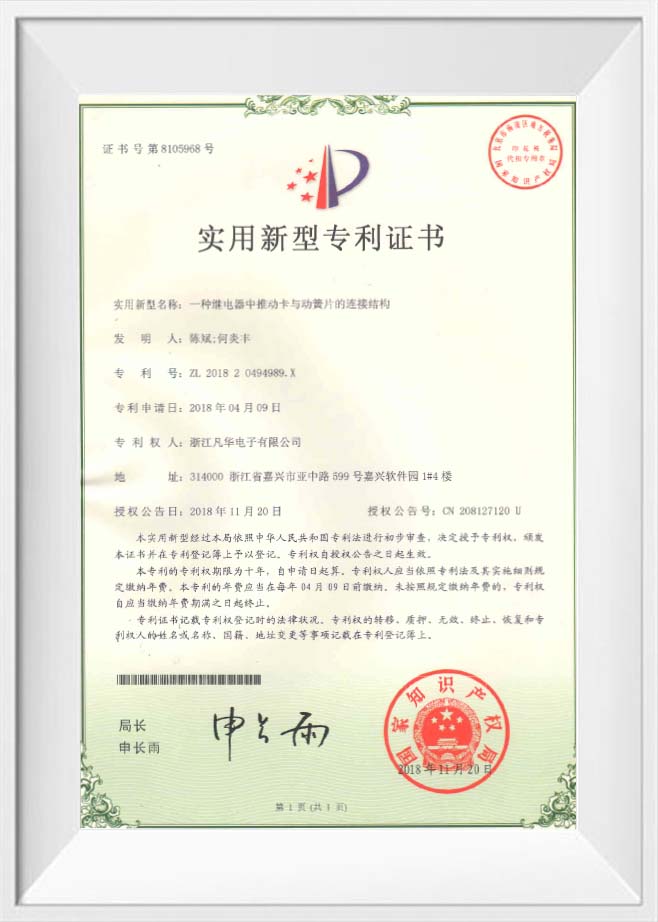
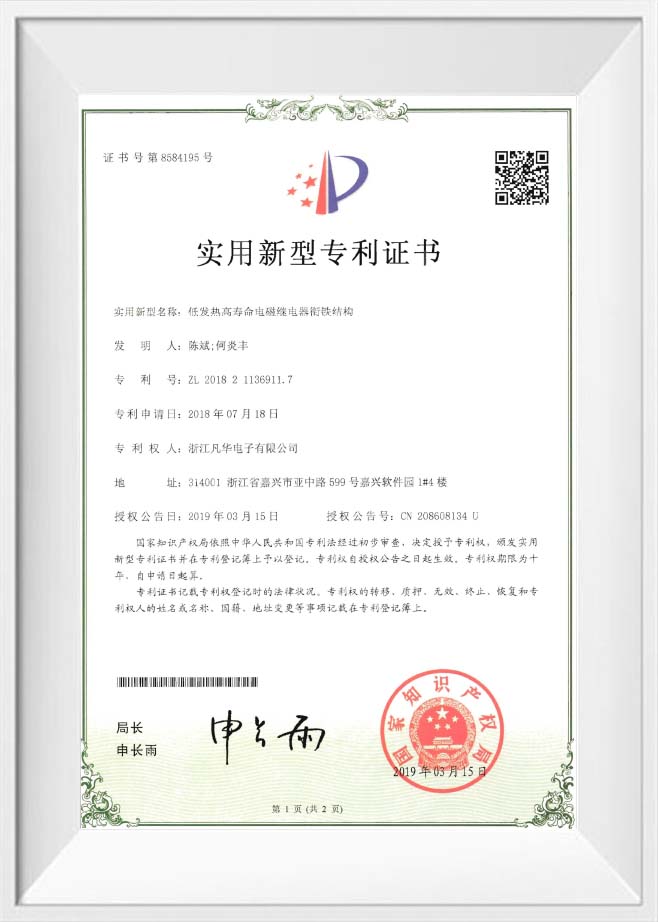
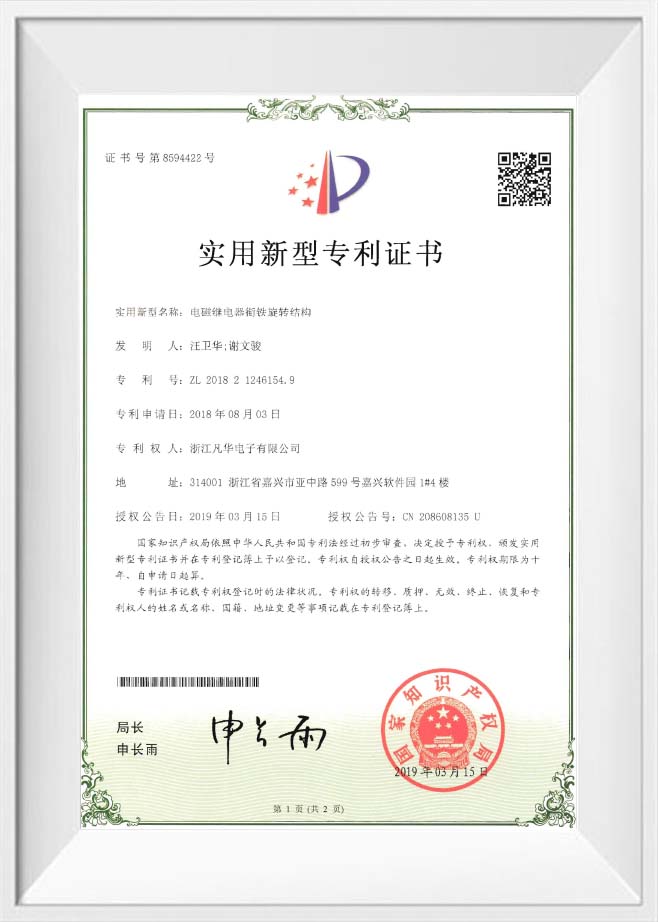
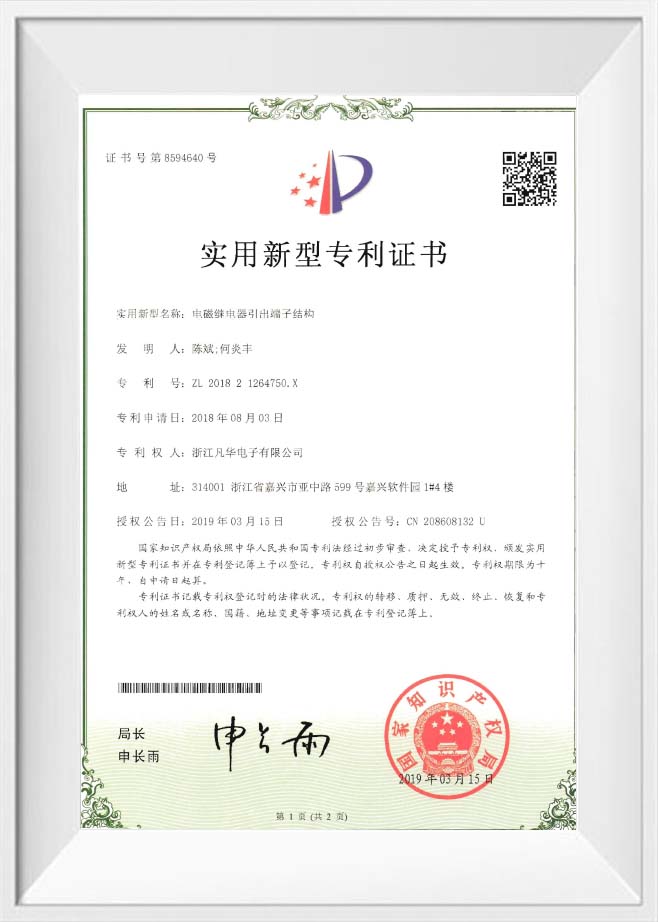
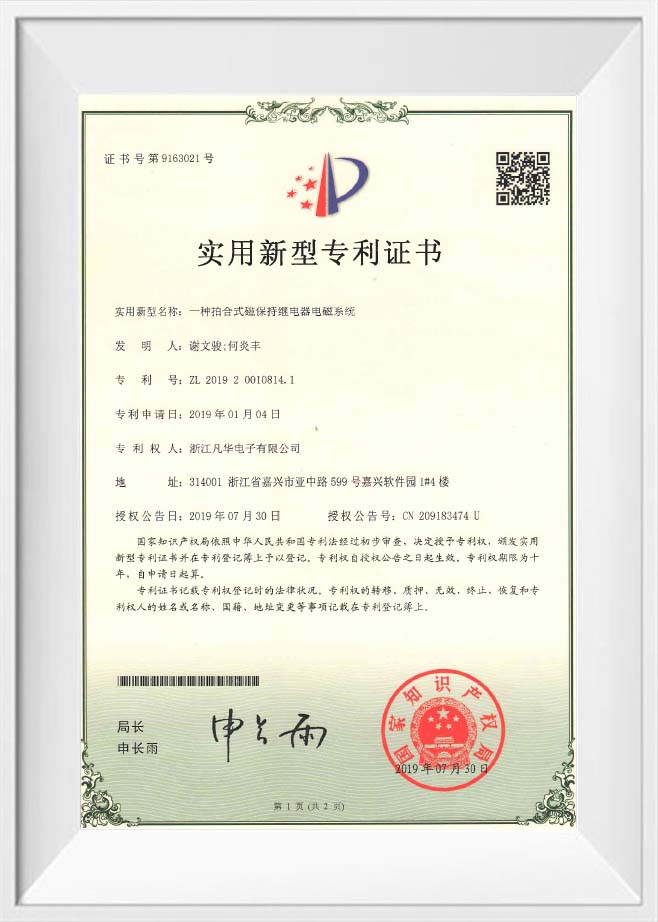
With a strong emphasis on technological innovation, we have been recognized as a National High-Tech Enterprise and Provincial R&D Center, holding more than 50 national patents. Our products have obtained international certifications, including ISO9001、ISO14001 and ISO45001, as well as authoritative UL、TUV and CQC certifications, fully complying with EU ROHS/REACH directives.
Maintaining a 98% delivery satisfaction rate, our products serve global industry leaders such as Huawei, Bull, and Eaton in smart home, industrial control, new energy, and power meter applications. Looking ahead, Fanhar Electronics will continue expanding production capacity and deepening our presence in the new energy market, striving to become a provider in the relay industry. We offer Industrial Components for sale.
The most common mistake in current shunt resistor selection is treating the continuous current rati...
Read MoreRelays, as classic electrically controlled switching components, are powerful because they can use ...
Read MoreWith the rapid proliferation of new energy power generation, energy storage systems, and electric ...
Read MoreSouth Asia's Premier Power & Energy Event – Three Shows in One with Unprecedented Scale POWERG...
Read MoreWhen you need to measure the current flowing through a power rail, a battery discharge line, or a s...
Read MoreHigh Load Switching Capability to Meet the On/Off Control Needs of New Energy Equipment With the r...
Read MoreIn the evolving landscape of industrial automation and power management, the debate between solid-state and electromechanical switching technologies continues to generate significant interest among engineers and system designers. While solid-state relays (SSRs) have gained prominence in applications requiring rapid switching and extended operational lifespans, electromechanical components—particularly electromechanical relays—maintain distinct advantages in high-load scenarios that cannot be easily replicated by their semiconductor counterparts.
Electromechanical relays operate on principles that have remained largely unchanged since their inception, yet continue to offer unique benefits in specific application domains. At their core, these devices utilize an electromagnetic coil to mechanically actuate switch contacts, creating a physical separation between control and load circuits.
The galvanic isolation provided by electromechanical relays represents one of their most critical attributes in high-load applications. Unlike solid-state devices, which rely on semiconductor junctions and inherently leak small currents, electromechanical relays offer complete electrical isolation between input and output circuits. This characteristic proves essential in industrial settings where electromagnetic interference (EMI) and voltage transients are commonplace.
Furthermore, the contact resistance characteristics of electromechanical relays demonstrate superior performance in high-current applications. While SSRs exhibit a fixed voltage drop across their semiconductor junctions—typically 1-2 volts—electromechanical relays present minimal resistance when closed, often in the milliohm range. This translates to:
The physical robustness of electromechanical relay contacts also enables them to withstand surge currents and inrush conditions that would compromise solid-state devices. Motor starting applications, transformer energization, and capacitive load switching all present temporary current spikes that can exceed nominal ratings by several multiples.
To fully appreciate the sustained superiority of electromechanical relays in high-load contexts, a systematic comparison with solid-state alternatives proves instructive.
| Performance Parameter | Electromechanical Relays | Solid-State Relays |
|---|---|---|
| Contact Resistance | Typically less than 100 milliohms | Fixed voltage drop (1-2V equivalent) |
| Galvanic Isolation | Complete physical separation | Optical or transformer coupling |
| Surge Current Capability | 10-20x nominal rating (momentary) | Limited by semiconductor junction |
| Operating Temperature Range | Typically -40°C to +85°C | Derating required above +40°C |
| Leakage Current (Off-State) | Essentially zero | Microamp to milliamp range |
| Electromagnetic Compatibility | Generates EMI during switching | Silent operation, no contact bounce |
| Maintenance Requirements | Contact wear over millions of cycles | No moving parts, theoretically indefinite |
This comparison reveals that while solid-state relays excel in applications requiring frequent switching and minimal maintenance, electromechanical components maintain decisive advantages in scenarios characterized by high current loads, harsh electrical environments, and stringent isolation requirements.
The thermal performance differential becomes particularly significant in high-load industrial applications. Solid-state relays dissipate power proportional to their load current and inherent voltage drop, necessitating substantial heat sinking and ventilation. Electromechanical relays, conversely, generate minimal heat during steady-state operation, simplifying enclosure design and reducing cooling system burdens.
Specific industrial sectors continue to rely predominantly on electromechanical switching technology, driven by operational requirements that align with the inherent capabilities of these devices.
Electrical utility applications represent a primary domain where electromechanical relays maintain uncontested dominance. Medium-voltage switching, protective relaying, and grid isolation functions all demand the absolute reliability and clear circuit interruption that only physical contacts can provide.
In photovoltaic energy systems and electric vehicle charging infrastructure, electromechanical relays serve critical functions in DC isolation and safety disconnection. The high voltages present in these emerging energy applications—often exceeding 1000V DC—stress semiconductor devices significantly.
Zhejiang Fanhar Electronics Co., Ltd. has developed specialized relay products specifically addressing these demanding applications, leveraging their extensive experience in electromechanical components manufacturing to meet stringent safety and reliability standards.
Motor starting and protection applications present electrical stresses that favor electromechanical switching solutions. The inrush currents associated with induction motor starting—typically six to eight times nominal full-load current—exceed the surge ratings of most solid-state devices.
Additionally, the overload protection functions integrated into electromechanical motor starters provide thermal modeling capabilities that semiconductor-based solutions struggle to replicate cost-effectively.
Applications where failure modes must be predictable and fail-safe favor electromechanical relays due to their deterministic behavior. Unlike solid-state devices, which can fail in short-circuit or partially conducting states, electromechanical relays typically fail open when contact erosion occurs—a failure mode that is immediately detectable and generally safe.
The reliable deployment of electromechanical relays in high-load applications depends critically upon comprehensive validation using appropriate circuit measurement tools. These instruments enable engineers to verify relay performance under actual operating conditions and to detect degradation before functional failure occurs.
| Measurement Type | Instrument | Purpose |
|---|---|---|
| Contact Resistance | Micro-ohmmeters | Detect contact degradation |
| Timing Analysis | Digital storage oscilloscopes | Verify operate/release times |
| Insulation Resistance | Megohmmeters | Verify isolation integrity |
| Coil Characteristics | Multimeters, LCR meters | Assess electromagnetic health |
Contact resistance measurement represents a fundamental diagnostic procedure. In high-current applications, even modest increases in contact resistance generate significant additional heat, accelerating deterioration and potentially creating thermal runaway conditions.
Timing analysis constitutes another essential measurement domain. Electromechanical relays exhibit specific operate and release times that impact system coordination and protection selectivity. In complex industrial components systems incorporating multiple switching stages, precise timing verification prevents race conditions.
Contemporary circuit measurement tools increasingly incorporate connectivity features that enable integration with industrial IoT and predictive maintenance platforms. Smart relays equipped with embedded sensors provide continuous monitoring of:
Zhejiang Fanhar Electronics Co., Ltd. maintains advanced testing laboratories equipped with comprehensive circuit measurement tools to validate product performance throughout development and production. Their quality assurance protocols include 100% testing of critical parameters such as contact resistance, dielectric strength, and timing characteristics.
Electromechanical relays function as integral elements within broader systems of industrial components, and their selection must account for compatibility with associated equipment and availability through reliable supply channels.
Industry standards such as IEC 61810 for electromechanical relays define dimensional envelopes, terminal configurations, and performance ratings that enable substitution between qualified manufacturers. This standardization benefits system designers by:
The supply chain reliability of electromechanical components has gained heightened attention following recent global disruptions. Unlike solid-state devices, which depend on specialized wafer fabrication capacity, electromechanical relays utilize manufacturing processes that are less vulnerable to geographic concentration.
Quality certification and traceability requirements in industrial markets necessitate that relay suppliers maintain robust quality management systems. International standards including:
Zhejiang Fanhar Electronics Co., Ltd. operates 30 fully automated production lines staffed by nearly 500 professional employees. Their products have obtained authoritative certifications including UL, TUV, and CQC, fully complying with EU ROHS/REACH directives, and serve industry leaders in smart home, industrial control, new energy, and power meter applications with a 98% delivery satisfaction rate.
While electromechanical relays maintain established advantages in high-load applications, continuous refinement of design and materials sustains their competitiveness against emerging alternatives.
Contact material science represents a primary domain of innovation. Traditional silver-based contact alloys have been supplemented with advanced compositions incorporating refractory metals and rare earth elements to improve resistance to welding, erosion, and oxidation.
Magnetic system optimization through computational modeling and advanced materials reduces coil power consumption and improves actuation reliability. Latching relay designs address energy efficiency concerns while preserving electromechanical advantages.
The integration of electromechanical and electronic technologies in hybrid relay designs attempts to capture benefits of both approaches. These devices utilize semiconductor elements for arc suppression and current limiting during switching transitions, while relying on mechanical contacts for steady-state conduction.
Zhejiang Fanhar Electronics Co., Ltd. invests 6%-8% of annual sales revenue in research and development, maintaining recognition as a National High-Tech Enterprise and Provincial R&D Center with more than 40 national patents. The company continues expanding production capacity and deepening presence in the new energy market.
The persistence of electromechanical relays in high-load industrial applications stems from fundamental physical characteristics that solid-state technologies cannot replicate:
While semiconductor switching continues to advance, the electromechanical relay retains decisive advantages in scenarios involving substantial currents, harsh electrical environments, and safety-critical functions.
The reliable deployment of these devices depends upon rigorous validation using appropriate circuit measurement tools, thoughtful integration within systems of complementary industrial components, and sourcing from manufacturers maintaining robust quality systems and supply chain resilience.
The operational lifespan varies significantly based on load characteristics, switching frequency, and environmental conditions. Under resistive loads at rated current, quality relays may achieve millions of operational cycles. However, inductive or capacitive loads reduce this figure substantially. Proper derating and regular maintenance using appropriate circuit measurement tools can significantly extend service life.
Selection requires evaluation of:
Electromechanical relays generally prevail in high-current applications where complete galvanic isolation is mandatory.
Maintenance protocols should include:
Yes, specialized electromechanical relays are explicitly designed for these demanding applications. The high DC voltages present in photovoltaic arrays and EV charging infrastructure stress switching components significantly. Manufacturers including Zhejiang Fanhar Electronics Co., Ltd. offer products specifically engineered for new energy applications.
Temperature extremes, humidity, vibration, and contamination all impact relay performance. Selecting relays with appropriate environmental ratings, implementing protective enclosures, and adhering to manufacturer derating guidelines mitigates these effects.