
 EN
EN
 English
 Español
 русский
 简体中文
简体中文

The most common mistake in current shunt resistor selection is treating the continuous current rating as the main specification. A shunt that can pass 100 A can still create a 2% error if its resistance drifts under self-heating, if solder...
Read More
x
Custom Automation & Multi-application Relays Manufacturers
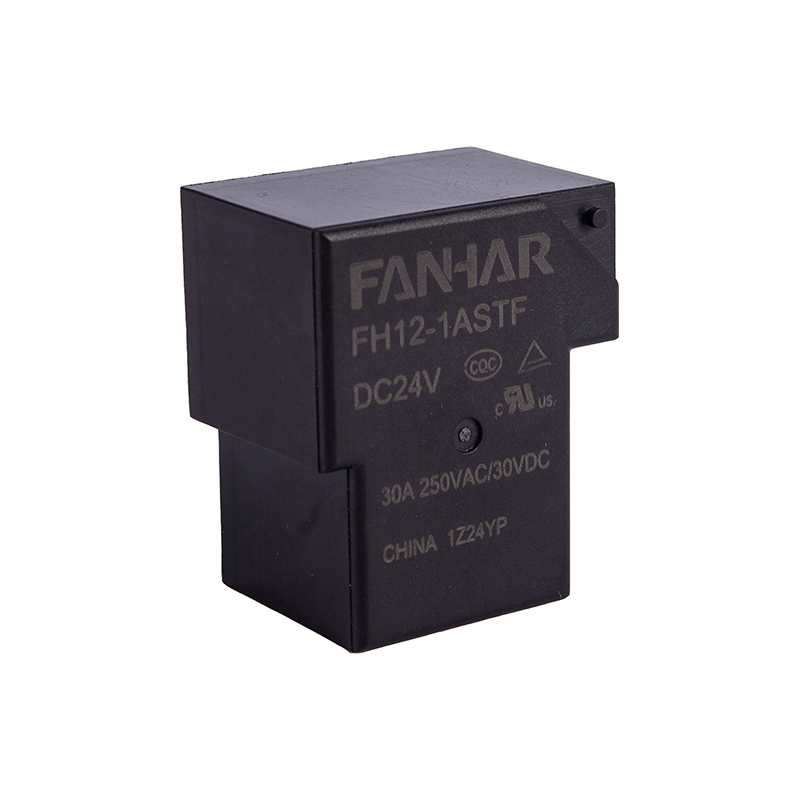
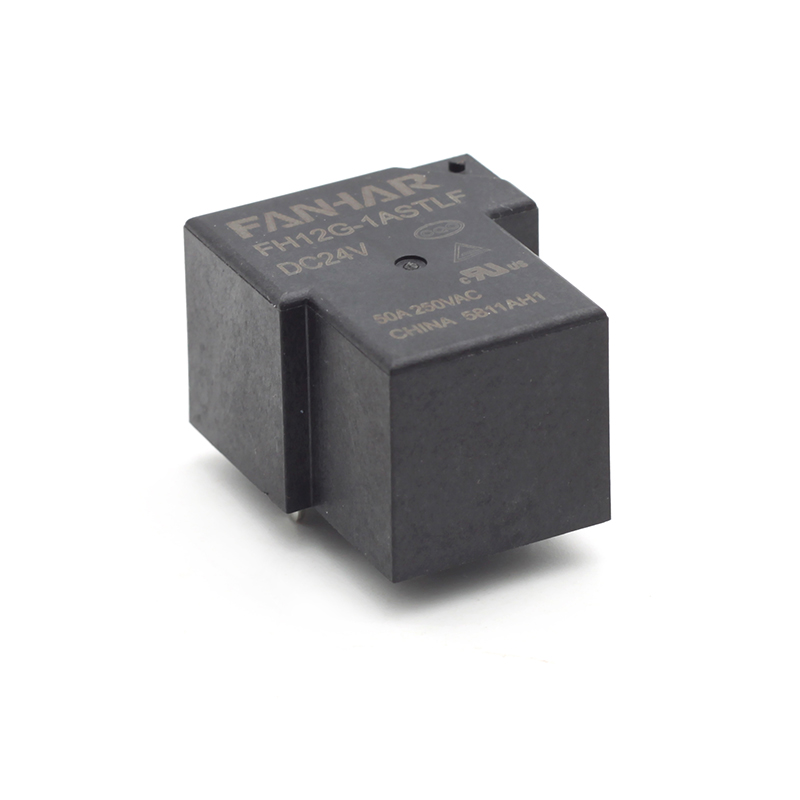

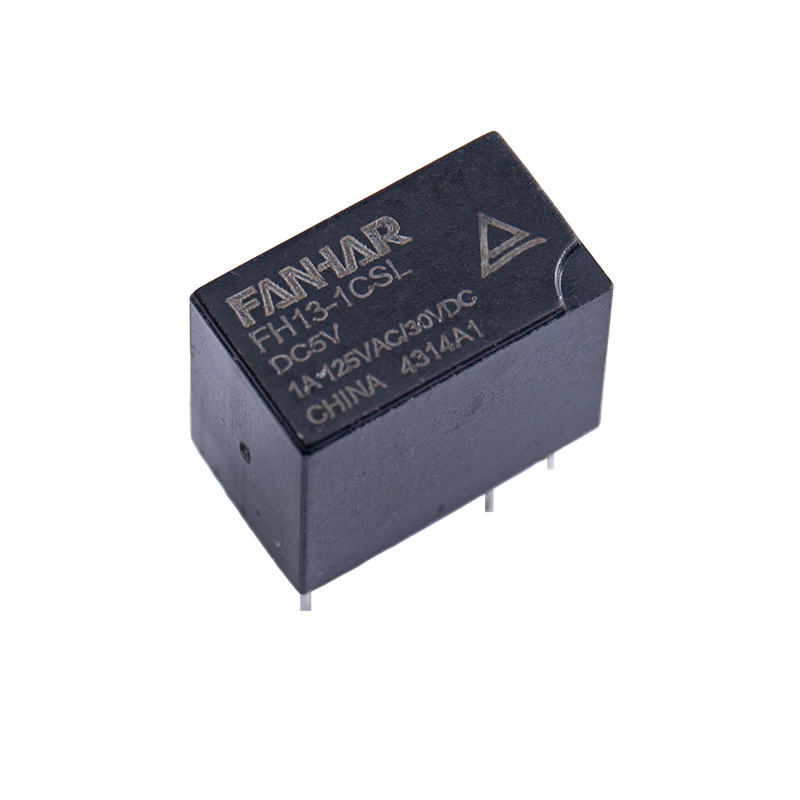
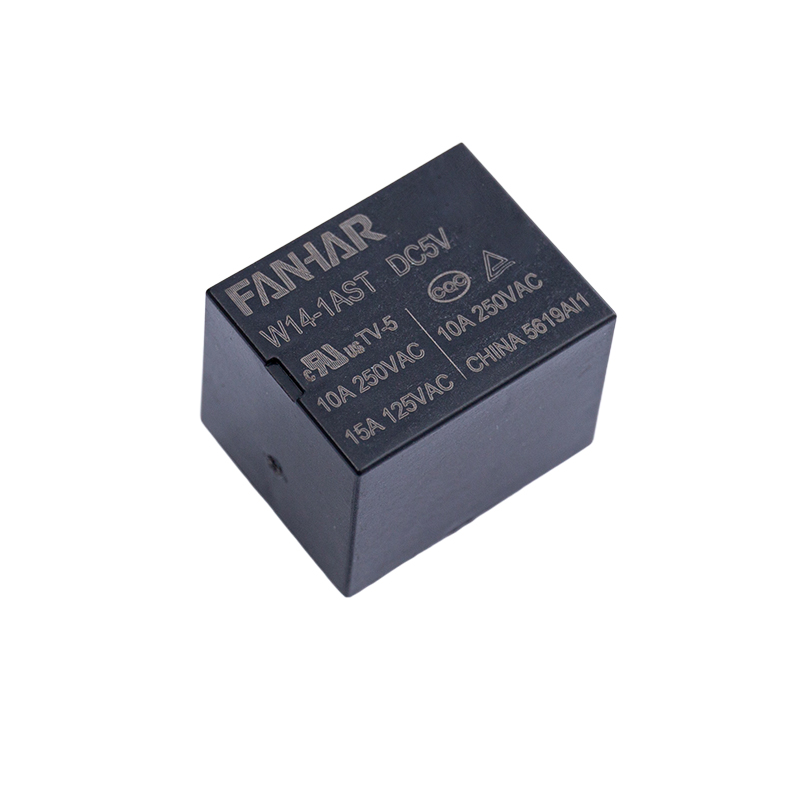
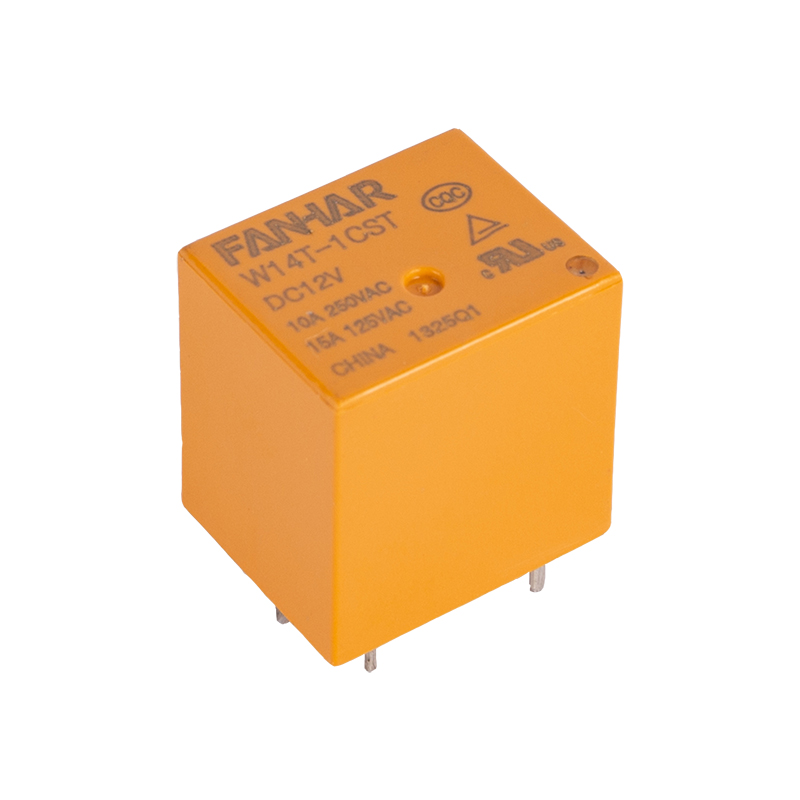
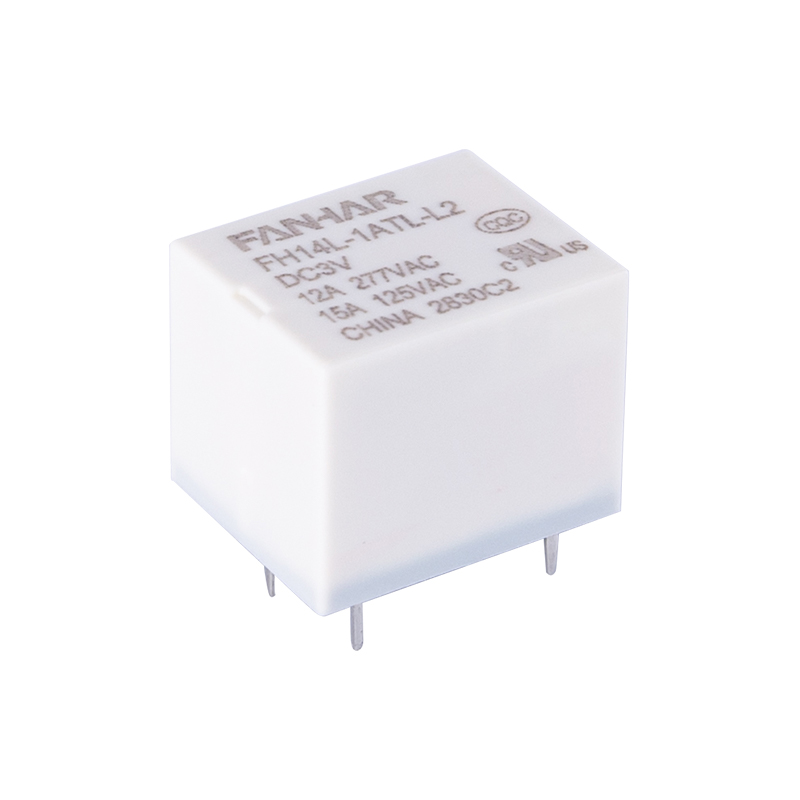
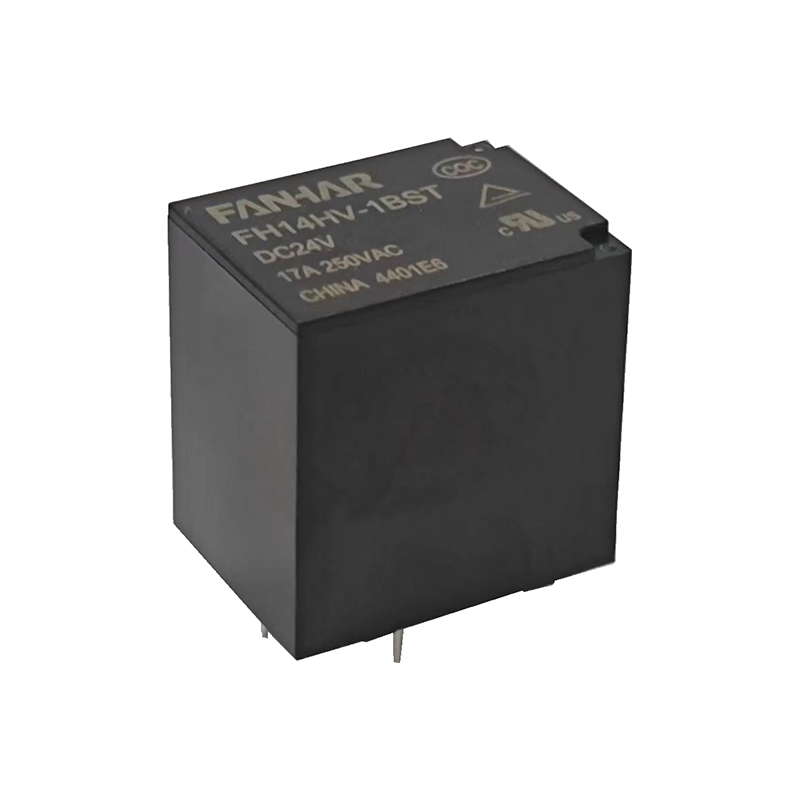
A relay is an electronic control device that is widely used in automatic control circuits. Its main function is to control a larger current through a smaller current, thereby achieving automatic regulation, safety protection, and conversion of the circuit. It usually consists of a control system (input circuit) and a controlled system (output circuit) and is an "automatic switch". The working principle of the relay is based on the electromagnetic effect. When the coil is energized, a magnetic field is generated to attract the armature, driving the contacts to connect or disconnect the circuit. In practical applications, relays are not only used to control high-power equipment, but are also widely used in automatic control systems to achieve functions such as remote control, signal amplification, and circuit switching. Due to its low power consumption, high sensitivity, and reliability, relays play an indispensable role in modern electronic equipment and industrial control systems.
About Us
Zhejiang Fanhar Electronics Co., Ltd.
Zhejiang Fanhar Electronics Co., Ltd. is China Custom Electromechanical Relays Factory and Multi-application Relays Manufacturers, a national high-tech enterprise specializing in R&D, manufacturing, and sales of relays. Our products are widely applied in smart home systems, photovoltaic new energy, charging piles, smart meters, industrial control, and other fields.
Currently, we have a professional team of nearly 600 employees and operate 35 fully automated production lines, with 40% of our products exported to over 20 countries worldwide. To better serve our customers and meet market demands, we continuously improve our products and manufacturing technologies, investing 6%-8% of annual sales revenue in R&D and innovation.
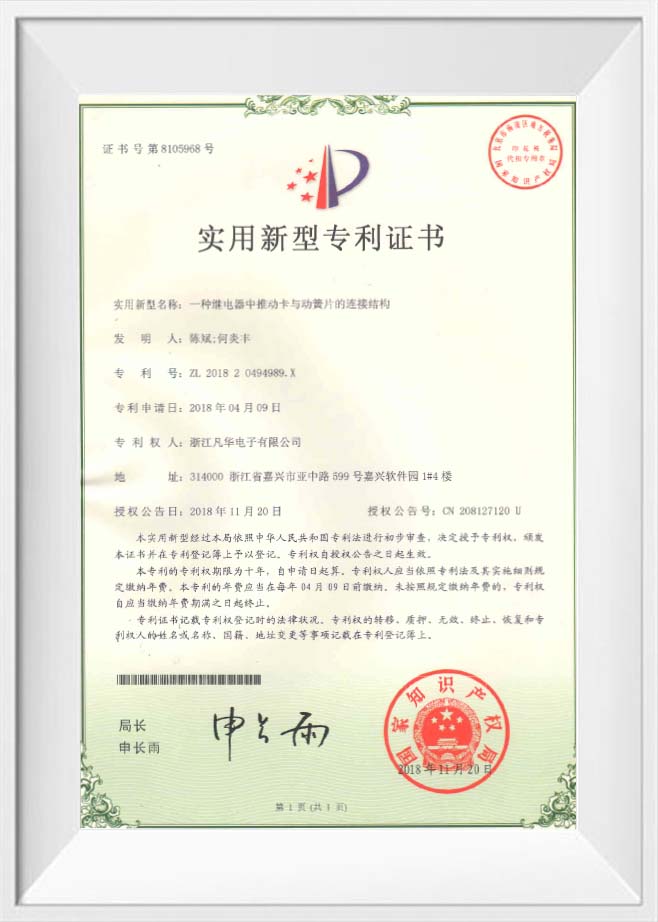
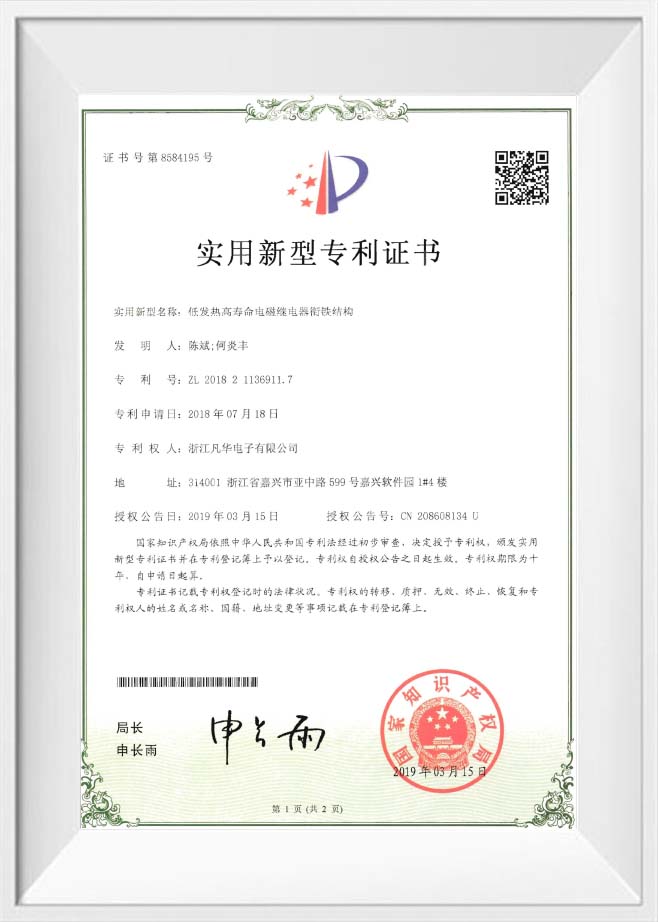
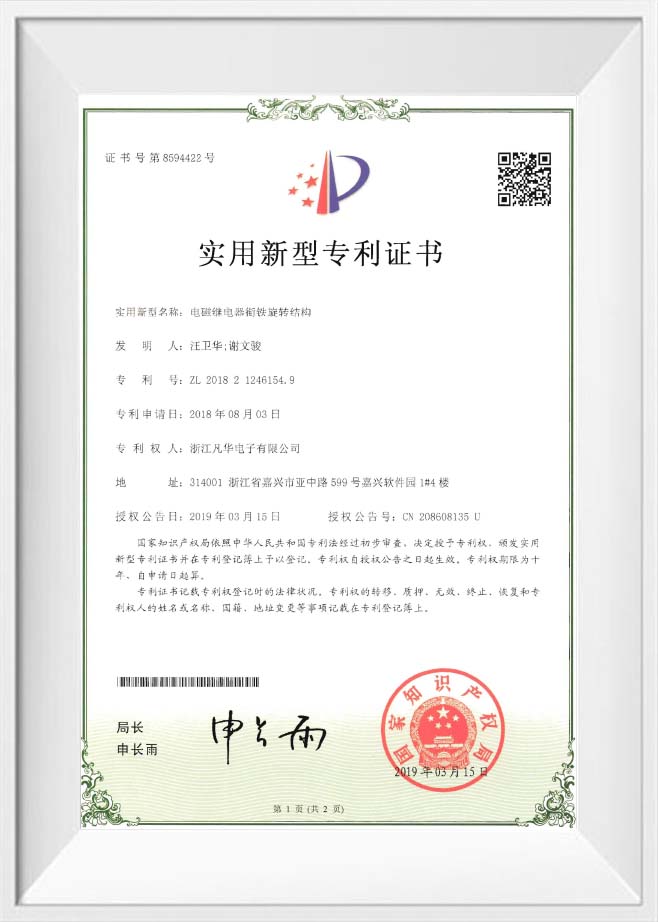
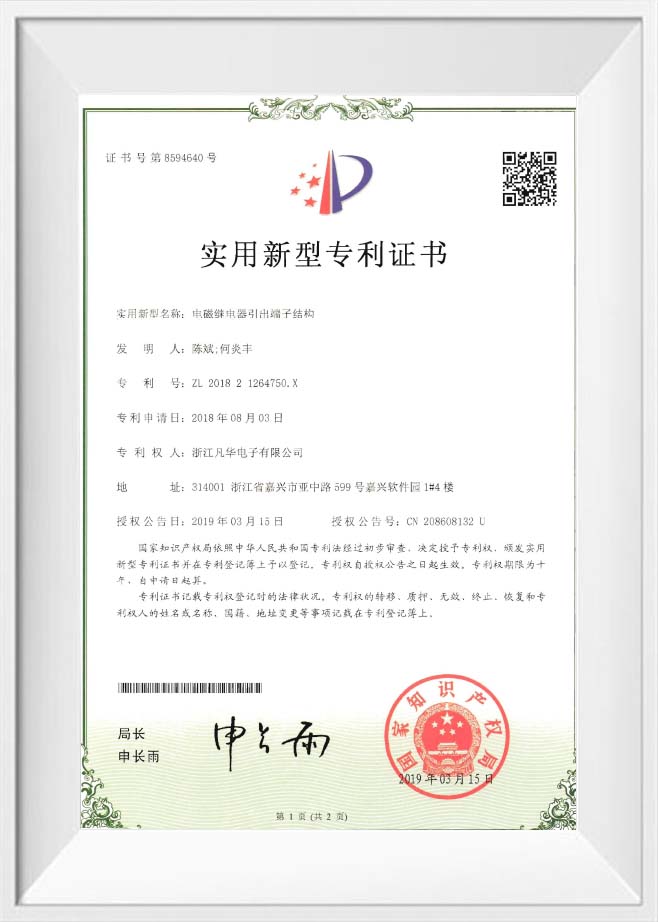
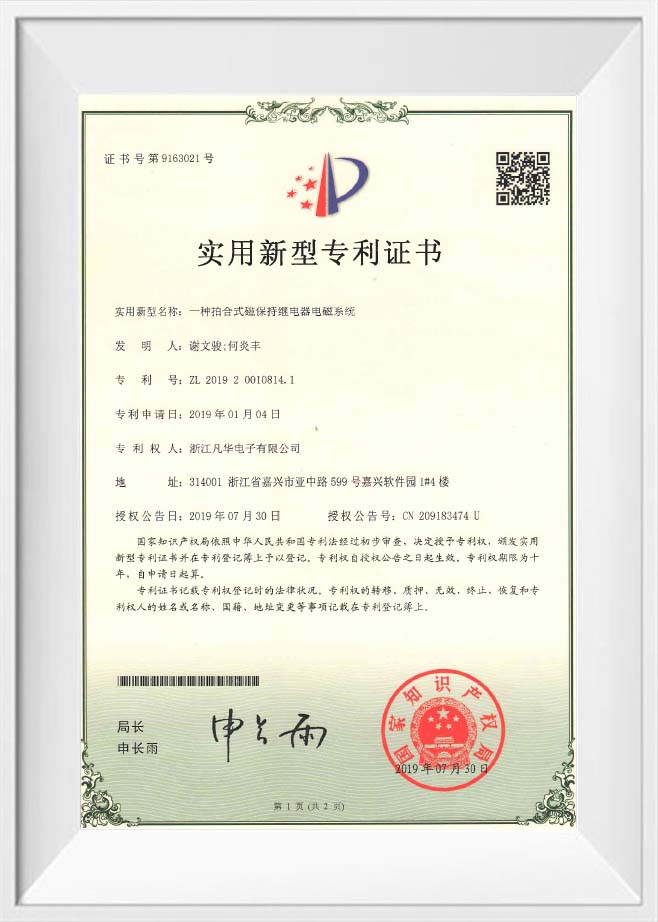
With a strong emphasis on technological innovation, we have been recognized as a National High-Tech Enterprise and Provincial R&D Center, holding more than 50 national patents. Our products have obtained international certifications, including ISO9001、ISO14001 and ISO45001, as well as authoritative UL、TUV and CQC certifications, fully complying with EU ROHS/REACH directives.
Maintaining a 98% delivery satisfaction rate, our products serve global industry leaders such as Huawei, Bull, and Eaton in smart home, industrial control, new energy, and power meter applications. Looking ahead, Fanhar Electronics will continue expanding production capacity and deepening our presence in the new energy market, striving to become a provider in the relay industry. We offer Automation Relays for sale.
Certificate Of Honor
News
-
-
Relays, as classic electrically controlled switching components, are powerful because they can use small current signals to control the switching and toggling of large current loads, and implement basic logic functions. This control method...
Read More -
With the rapid proliferation of new energy power generation, energy storage systems, and electric vehicle fast chargers, power relays—as critical switching components in circuits—play a vital role in determining the overall stability of e...
Read More -
South Asia's Premier Power & Energy Event – Three Shows in One with Unprecedented Scale POWERGEN India 2026 was held from September 1 to 3, 2026, at the Yashobhoomi – IICC in New Delhi, India. Co-located with Bharat Electricity and In...
Read More
Relay Industry Knowledge
Understanding Electromechanical Relays, Multi-application Relays, and Automation Relays in Modern Industrial Control Systems
1. Fundamental Principles
1.1 Definition and Core Function
An electromechanical relay is an electronic control device that is widely used in automatic control circuits. Its main function is to control a larger current through a smaller current, thereby achieving automatic regulation, safety protection, and conversion of the circuit.
Key characteristics of electromechanical relays:
- Consists of a control system (input circuit) and a controlled system (output circuit)
- Functions as an "automatic switch" in electrical systems
- Provides electrical isolation between control and load circuits
- Enables remote control and signal amplification
1.2 Working Principle
The working principle of the relay is based on the electromagnetic effect. When the coil is energized, a magnetic field is generated to attract the armature, driving the contacts to connect or disconnect the circuit.
The operational sequence follows these steps:
| Step | Description |
|---|---|
| 1. Input Signal | Low-power electrical signal applied to coil terminals |
| 2. Coil Energized | Current flows through coil winding, creating electromagnetic field |
| 3. Magnetic Attraction | Field magnetizes core and attracts armature |
| 4. Armature Movement | Mechanical motion initiates contact state change |
| 5. Contact Switching | Contacts open or close to complete/interrupt circuit |
| 6. Circuit Control | Load circuit is switched on or off |
| 7. Isolation Maintained | Electrical separation protects control circuit |
| 8. Coil De-energized | Input signal stops, magnetic field collapses |
| 9. Spring Return | Spring returns armature to original position |
2. Technical Specifications
2.1 Performance Parameters
Typical specifications of electromechanical relays include:
| Parameter | Specification | Application Impact |
|---|---|---|
| Maximum Voltage | Up to 1000V | Suitable for high-voltage industrial applications |
| Carry Current | Up to 15A | Handles moderate to high current loads |
| Switched Current | 1mA to 15A | Versatile from signal to power switching |
| Contact Resistance | As low as 0.01 ohms | Minimal power loss in conducting state |
| Contact Potential | Less than 1mV | Suitable for sensitive measurement circuits |
| Switching Speed | 5-15 milliseconds | Appropriate for standard industrial timing |
2.2 Contact Configurations
Common contact types for electromechanical relays:
- SPST (Single Pole Single Throw): One input and one output terminal; functions as simple on/off switch; available in normally open or normally closed variants
- SPDT (Single Pole Double Throw): One input switches between two outputs; provides selectable circuit paths
- DPDT (Double Pole Double Throw): Two fully isolated circuits with selectable outputs; ideal for simultaneous control of multiple circuits or redundant signal paths
3. Multi-application Relays
3.1 Application Domains
Multi-application relays are designed to address diverse operational requirements across multiple industrial sectors. These devices combine robust construction with flexible configuration options.
Primary application areas include:
| Application Field | Specific Use Cases | Key Requirements |
|---|---|---|
| Smart Home Systems | Lighting control, HVAC equipment, security systems | Compact size, quiet operation, reliable switching |
| Photovoltaic New Energy | DC switching, power distribution management | High reliability under varying environmental conditions |
| Charging Piles | Electric vehicle charging station control | Safe and efficient power distribution |
| Smart Meters | Load control, tamper detection | Extended operational life, precise switching |
| Industrial Control | Motor control, process automation, safety interlocks | High dependability, safety compliance |
3.2 Technical Advantages
Core advantages of multi-application relays:
- High Reliability and Safety: Quality materials and advanced manufacturing provide strong anti-interference, long lifespan, and stable operation
- Space-Saving Design: Compact size allows easy installation on high-density PCBs
- Fast Response: Quick switching meets demands of frequent operations in sophisticated automation systems
- Flexible Installation: Thoughtful design makes replacement and maintenance easy, reducing downtime
4. Automation Relays
4.1 Role in Industrial Systems
Automation relays serve as fundamental components in modern industrial automation architecture. They function as the interface between low-voltage control systems and high-power industrial equipment.
Key functions of automation relays:
- Signal Amplification: Converting weak sensor outputs into sufficient power to drive actuators
- Circuit Isolation: Providing electrical separation between sensitive control electronics and high-voltage power circuits
- Load Switching: Controlling motors, pumps, heaters with precise timing
- Safety Interlocking: Implementing emergency stop functions and protective shutdown sequences
- Sequence Control: Enabling coordinated operation of multiple machines in production lines
4.2 Integration with Control Systems
Automation relays integrate seamlessly with:
- Programmable Logic Controllers (PLCs)
- Supervisory Control and Data Acquisition (SCADA) systems
- Remote monitoring systems
- Building Management Systems (BMS)
5. Industry Applications
5.1 Manufacturing and Process Control
In industrial automation and process control systems, electromechanical relays and automation relays function as critical interfaces between programmable logic controllers and heavy actuators.
Specific applications include:
- Controlling motors on assembly lines
- Managing pumps and conveyor belts
- Implementing safety interlocks
- Enabling precise production rhythms
5.2 Power System Protection
Electrical relays act as protective devices in transmission and distribution systems. They detect faults such as overcurrent, under-voltage, or short circuits, and trigger circuit breakers to prevent damage to transformers, feeders, and connected equipment.
5.3 Home and Building Automation
Relays are widely used in commercial and industrial lighting systems. They integrate with occupancy sensors, building management systems, or programmable controllers to enable automated control, scheduled switching, and energy efficiency.
6. Company Profile: Zhejiang Fanhar Electronics
6.1 Corporate Overview
Zhejiang Fanhar Electronics Co., Ltd. is a national high-tech enterprise specializing in R&D, manufacturing, and sales of relays. The company maintains a professional team of nearly 500 employees and operates 30 fully automated production lines.
6.2 Product Portfolio
The company's products are widely applied in:
- Smart home systems
- Photovoltaic new energy
- Charging piles
- Smart meters
- Industrial control
6.3 Quality and Innovation
To better serve customers and meet market demands, Zhejiang Fanhar Electronics continuously improves its products and manufacturing technologies, investing 6%-8% of annual sales revenue in R&D and innovation.
The company has been recognized as a National High-Tech Enterprise and Provincial R&D Center, holding more than 40 national patents. Products have obtained international certifications including ISO9001, ISO14001, and ISO45001, as well as authoritative UL, TUV, and CQC certifications, fully complying with EU ROHS/REACH directives.
7. Comparison: Electromechanical vs. Solid-State Relays
7.1 Technical Differences
| Parameter | Electromechanical Relay (EMR) | Solid-State Relay (SSR) |
|---|---|---|
| Switching Mechanism | Mechanical contacts driven by electromagnetic coil | Semiconductor devices (thyristors, triacs) |
| Moving Parts | Yes | No |
| Switching Speed | 5-15 milliseconds | Microseconds |
| Operating Noise | Audible click | Silent operation |
| Contact Wear | Present (mechanical wear) | None |
| OFF-State Leakage | None | 2-10 mA typical |
| ON-State Voltage Drop | Minimal (low contact resistance) | Up to 1.5V |
| Typical Lifespan | Hundreds of thousands to millions of cycles | Theoretically unlimited |
| Heat Generation | Minimal | Significant (may require heat sinks) |
| Initial Cost | Lower | Higher |
7.2 Selection Guidelines
Choose electromechanical relays for:
- High-current applications
- Clear physical isolation requirements
- Cost-sensitive designs
- Moderate switching frequencies
- Applications requiring audible confirmation of operation
Choose solid-state relays for:
- High-speed switching requirements
- Silent operation environments
- Extremely frequent switching operations
- Severe vibration or dust contamination
- Applications where mechanical wear is unacceptable
8. Selection Criteria
8.1 Technical Considerations
When selecting electromechanical relays, multi-application relays, or automation relays, evaluate the following factors:
| Factor | Considerations |
|---|---|
| Voltage and Current Ratings | Match relay ratings with operational requirements; include safety margins |
| Load Type | Resistive loads vs. inductive loads (motors, solenoids) require different specifications |
| Switching Frequency | High-frequency applications may require SSRs or high-life EMRs |
| Environmental Conditions | Temperature, humidity, vibration, dust exposure |
| Response Time | Fast-switching applications need minimal delay |
| Mounting Style | DIN rail, PCB, or plug-in configurations |
| Certifications | UL, CE, IEC compliance for regional and industry standards |
8.2 Load Type Characteristics
Different load types present unique switching challenges:
- Resistive Loads: Heaters, incandescent lamps; present relatively benign switching conditions
- Inductive Loads: Motors, solenoids, transformers; generate high inrush currents and voltage spikes requiring enhanced contact materials and arc suppression
- Capacitive Loads: Power supplies, capacitor banks; present severe inrush conditions that may require pre-charge circuits
9. Maintenance and Troubleshooting
9.1 Common Failure Modes
Understanding failure modes helps prevent relay malfunction:
- Contact Welding: Contacts fuse closed due to excessive current or arcing; prevention includes proper sizing for inrush currents and arc suppression circuits
- Coil Burnout: Results from overvoltage or continuous operation beyond duty cycle
- Contact Corrosion: Caused by environmental exposure or infrequent operation
- Mechanical Wear: Normal degradation from repeated switching operations
9.2 Testing Procedures
Basic relay testing involves:
- Measure coil resistance with multimeter (infinite resistance indicates open coil)
- Apply rated voltage to coil terminals and verify audible switching
- Measure continuity across contacts in energized and de-energized states
- Verify contacts return to default states when voltage is removed
10. Future Trends
10.1 Technological Developments
The evolution of electromechanical relays, multi-application relays, and automation relays continues with several key trends:
- Miniaturization: Smaller relays capable of handling substantial loads while occupying minimal PCB area
- Smart Relays: Integration of sensors and communication protocols for real-time data and remote control
- Advanced Materials: Improved contact materials with enhanced arc resistance and longer operational life
- Energy Efficiency: Designs minimizing power consumption and maximizing durability
11. Frequently Asked Questions (FAQ)
Q1: What is the typical lifespan of an electromechanical relay?
A: The operational life depends heavily on load type and switching frequency. Under light resistive loads with infrequent switching, these devices can achieve millions of operational cycles. Heavy inductive loads or high-frequency switching may reduce service life to hundreds of thousands of cycles.
Q2: Why does my relay make a clicking noise?
A: The audible clicking is a normal characteristic of electromechanical relays, resulting from mechanical movement of the armature and contacts. This sound indicates proper mechanical function and provides useful feedback for troubleshooting.
Q3: How do I choose between EMR and SSR?
A: Choose electromechanical relays for high-current applications, clear physical isolation requirements, cost-sensitive designs, and moderate switching frequencies. Select solid-state relays for high-speed switching, silent operation, or environments with severe vibration.
Q4: What causes contact welding?
A: Contact welding typically results from excessive inrush current or prolonged arcing during switching. Prevention strategies include proper relay sizing for inrush currents and selection of relays with appropriate contact materials.
Q5: Can electromechanical relays switch both AC and DC?
A: Yes, but DC switching is more demanding because the absence of zero-crossings allows arcs to persist longer, causing greater contact erosion. Relays rated for DC switching typically have lower current ratings than AC equivalents.
Q6: What certifications should industrial relays have?
A: Important certifications include UL for North American markets, CE for European compliance, and IEC standards for international applications. Environmental compliance certifications such as ROHS and REACH ensure restriction of hazardous substances.
Q7: How do I test a relay?
A: Measure coil resistance with a multimeter, apply rated voltage and listen for switching, measure contact continuity in both states, and verify return to default positions when de-energized.
Q8: What is the difference between NO and NC contacts?
A: Normally open (NO) contacts are open when the coil is de-energized and close when energized. Normally closed (NC) contacts are closed when de-energized and open when energized.

- Tel +86-573-82237888
- Email [email protected]
- Address No. 828, Xinchang Road, Nanhu District, Jiaxing, Zhejiang, China
Products
