
 EN
EN
 English
 Español
 русский
 简体中文
简体中文

The most common mistake in current shunt resistor selection is treating the continuous current rating as the main specification. A shunt that can pass 100 A can still create a 2% error if its resistance drifts under self-heating, if solder...
Read More
x
Custom Current Sensor Transformer(CT) Manufacturers
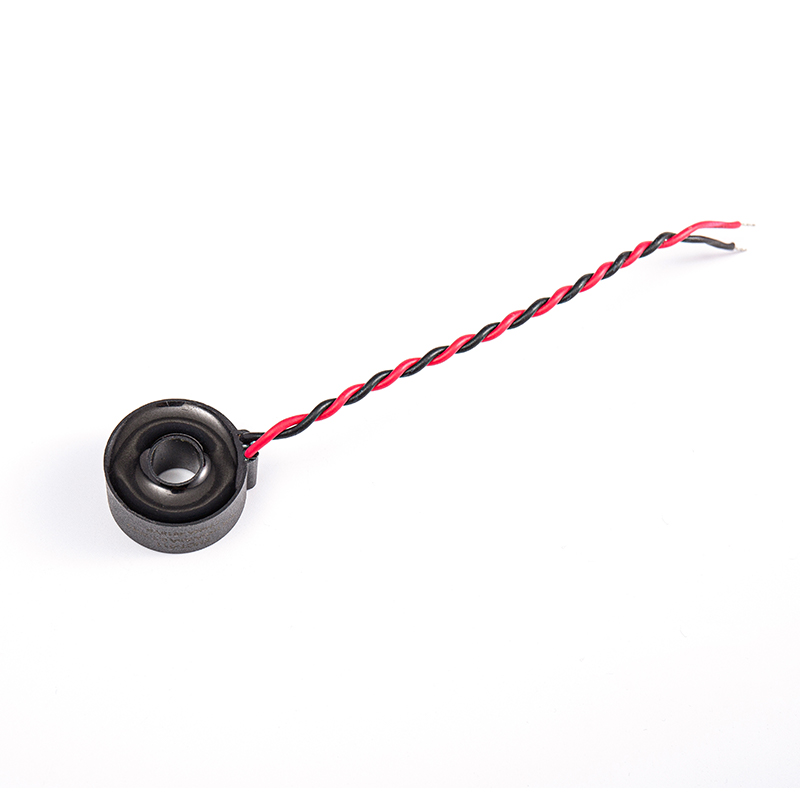
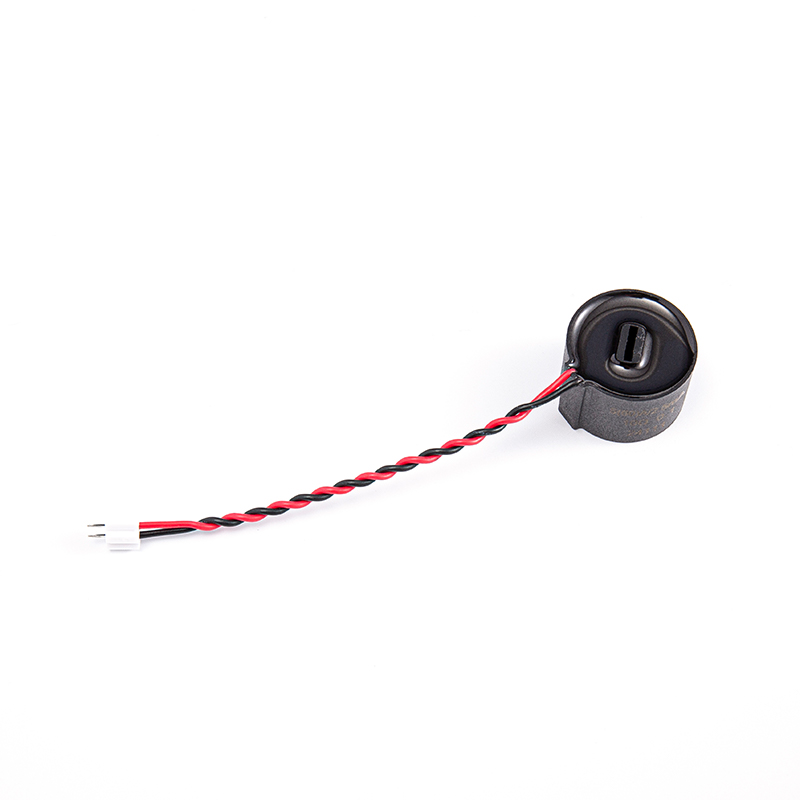
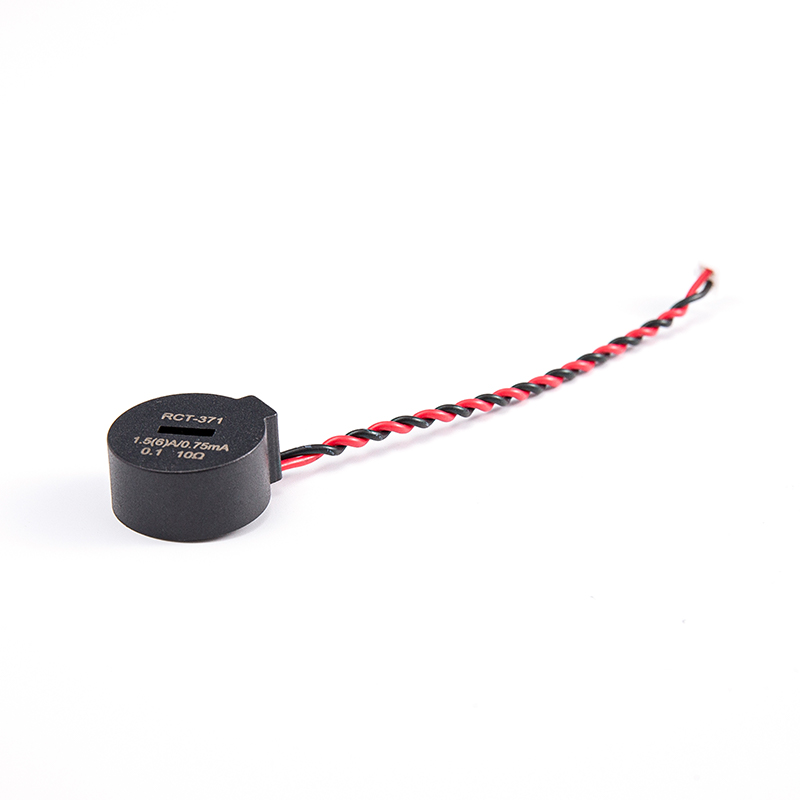
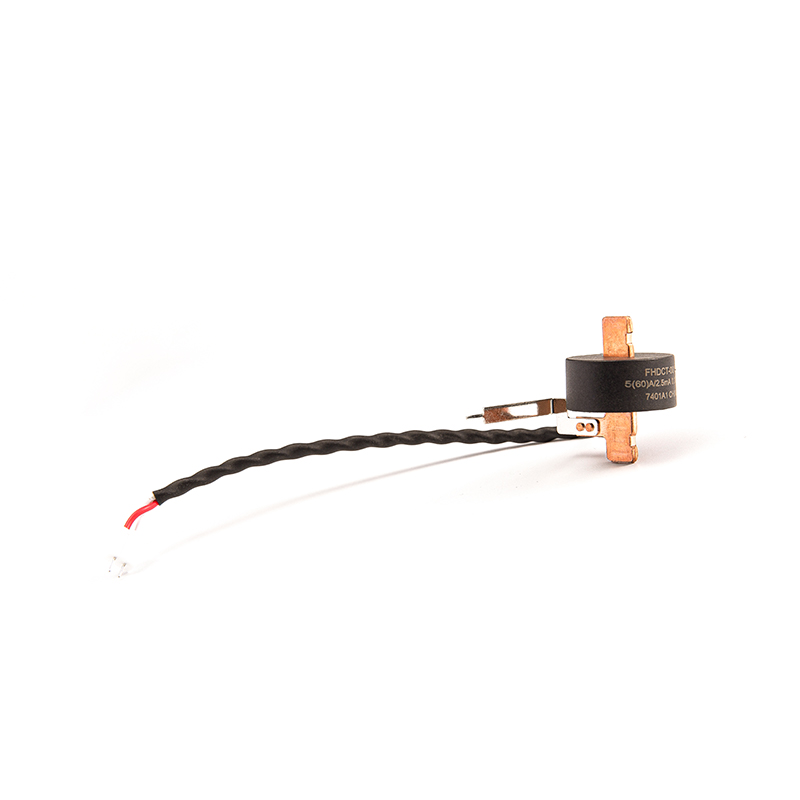
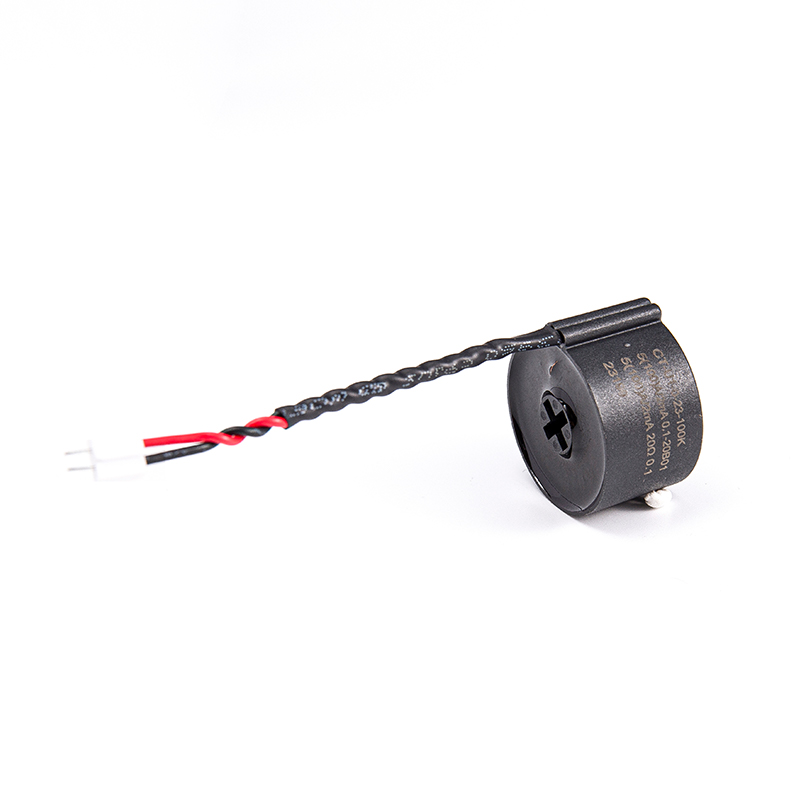
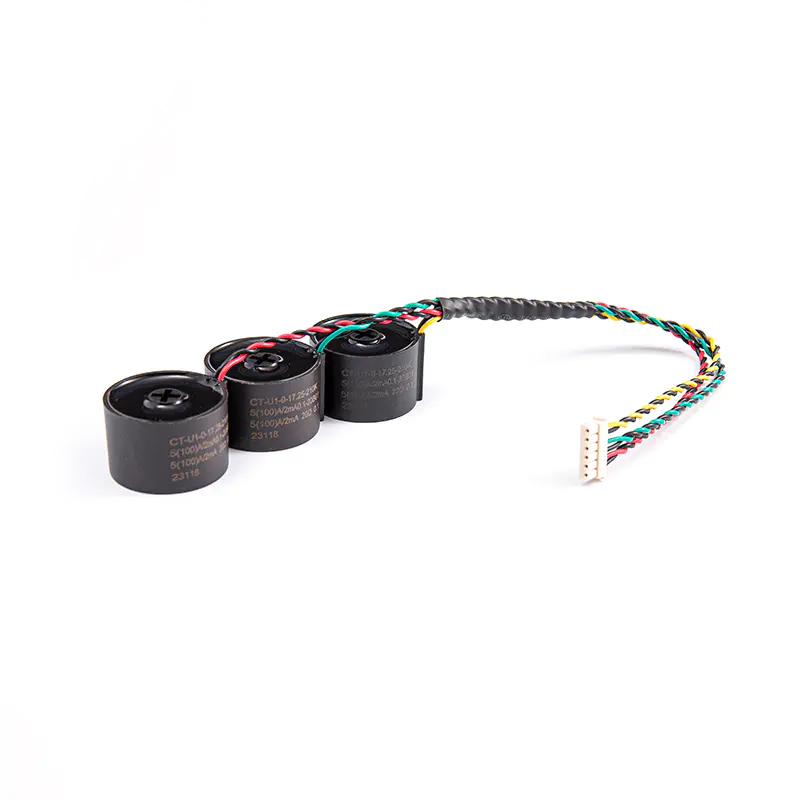
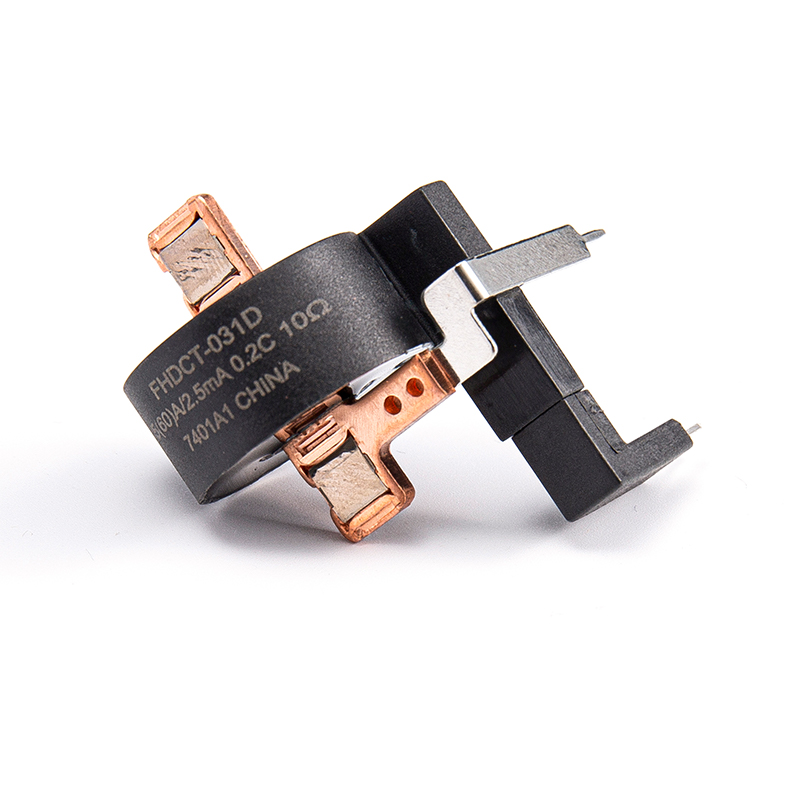
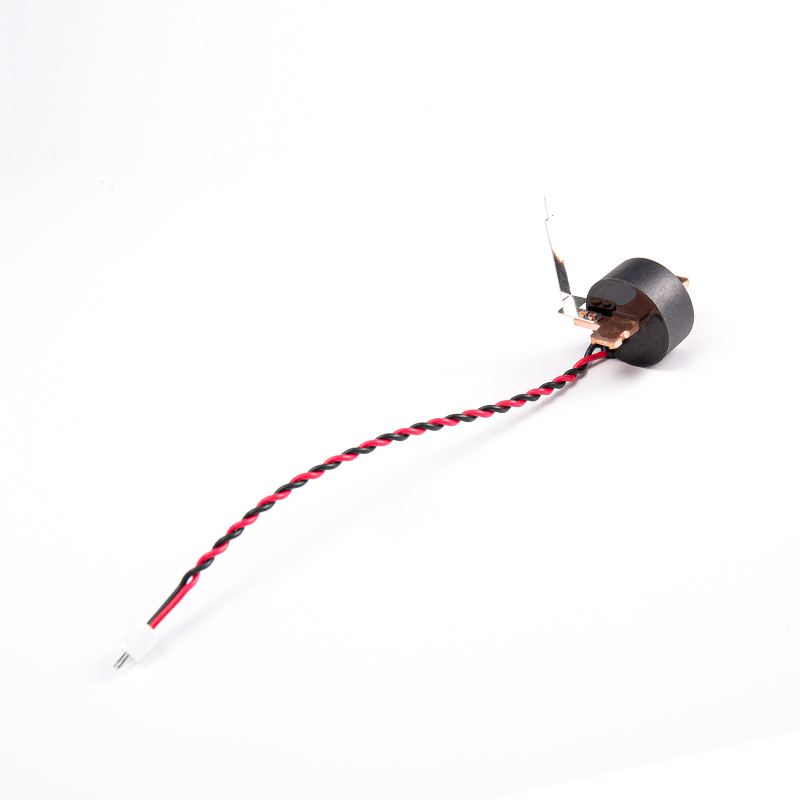
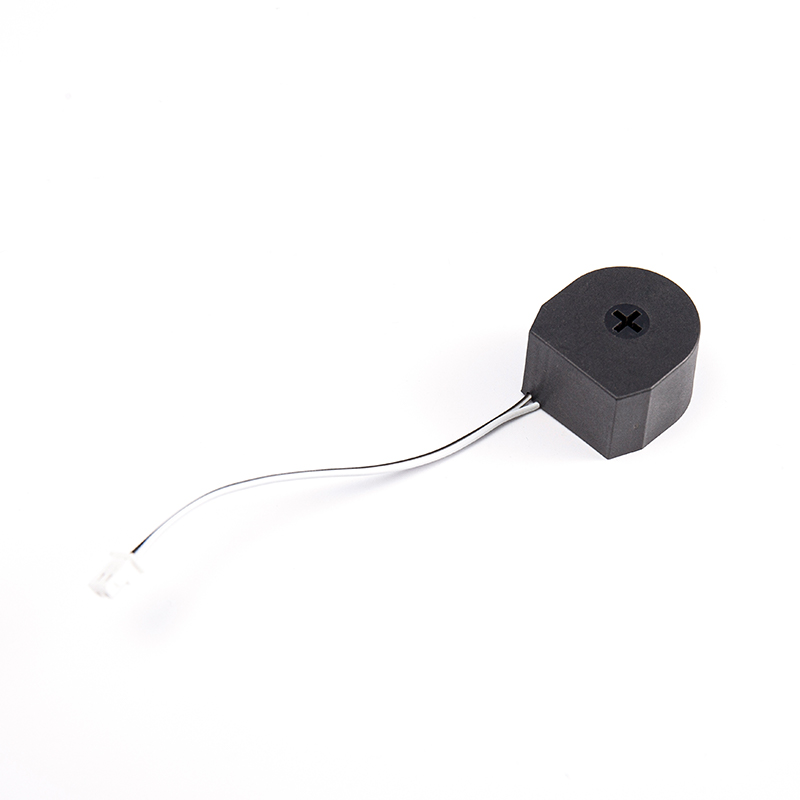
Current transformer (CT) is a device used to measure alternating current. It is widely used in power systems to ensure safe and accurate monitoring of current flow. It converts the large current on the primary side into a small current on the secondary side through the principle of electromagnetic induction, which is convenient for measurement, protection and control. The main function of the current transformer is to convert the large current into a small current in proportion so that it can be measured using electrical instruments of uniform specifications. It not only provides the measurement value of the current, but also plays the role of electrical isolation in the power system to prevent high voltage from causing harm to the measuring equipment and personnel. The structural design of the current transformer also pays great attention to practicality and safety. For example, the through-core current transformer measures the current by passing the wire through its center hole. This design makes installation and maintenance more convenient. The shell of the current transformer is usually made of plastic or metal materials with good insulation properties and is marked with obvious colors to indicate its purpose and importance.
About Us
Zhejiang Fanhar Electronics Co., Ltd.
Zhejiang Fanhar Electronics Co., Ltd. is China Custom Current Sensor Transformer Factory and Current Measuring Transformer Manufacturers, a national high-tech enterprise specializing in R&D, manufacturing, and sales of relays. Our products are widely applied in smart home systems, photovoltaic new energy, charging piles, smart meters, industrial control, and other fields.
Currently, we have a professional team of nearly 600 employees and operate 35 fully automated production lines, with 40% of our products exported to over 20 countries worldwide. To better serve our customers and meet market demands, we continuously improve our products and manufacturing technologies, investing 6%-8% of annual sales revenue in R&D and innovation.
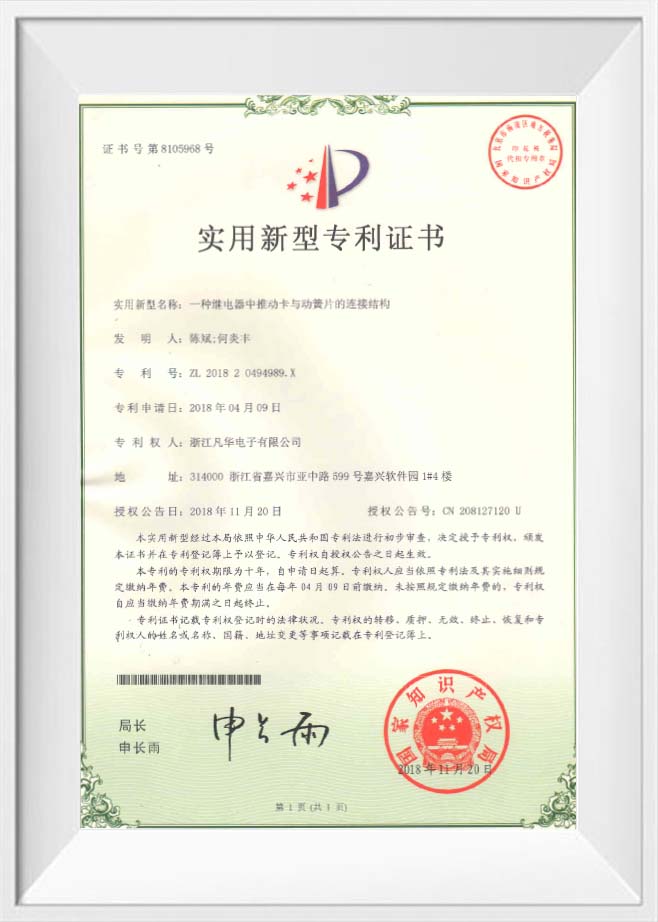
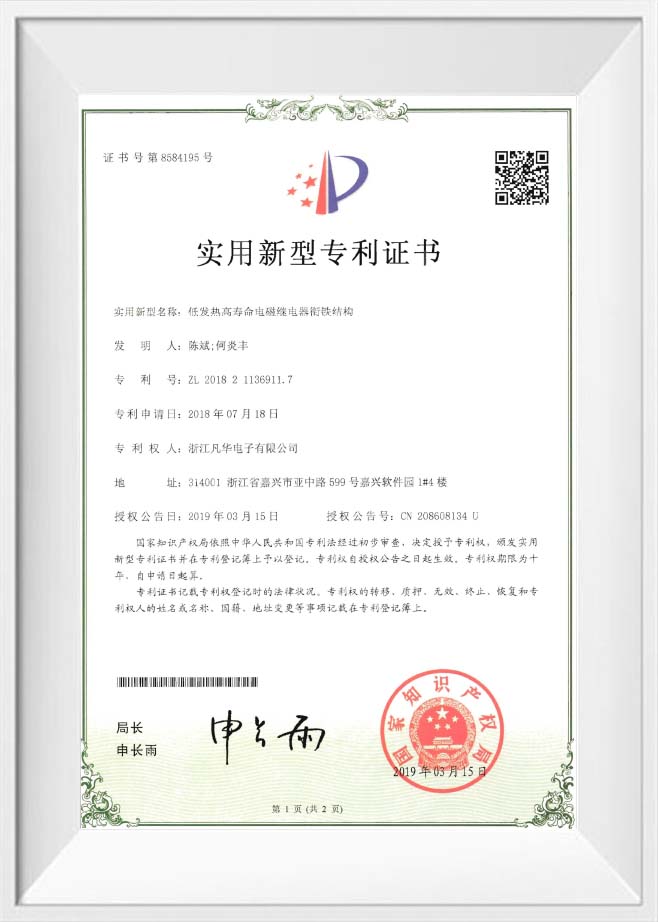
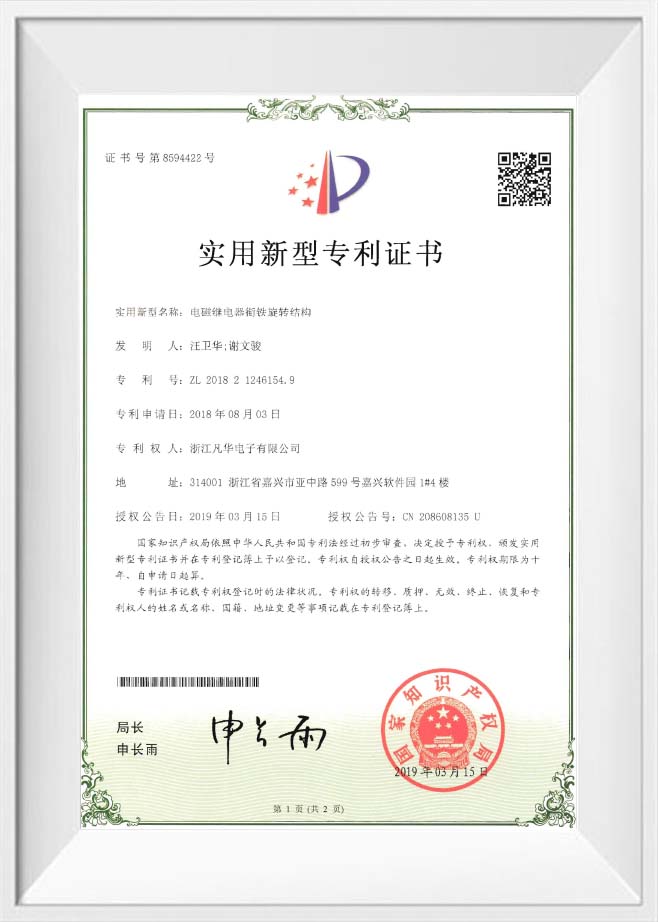
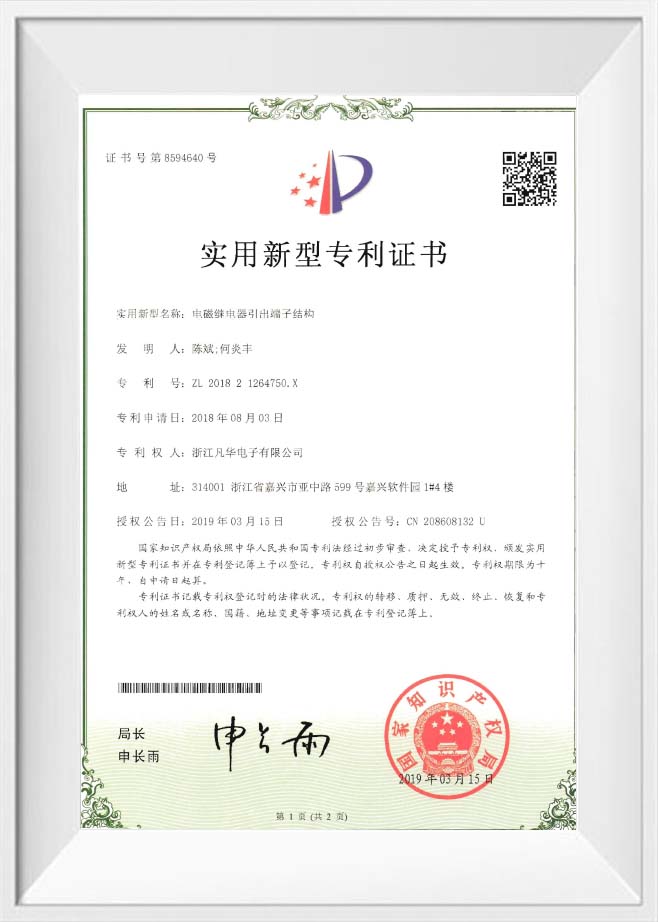
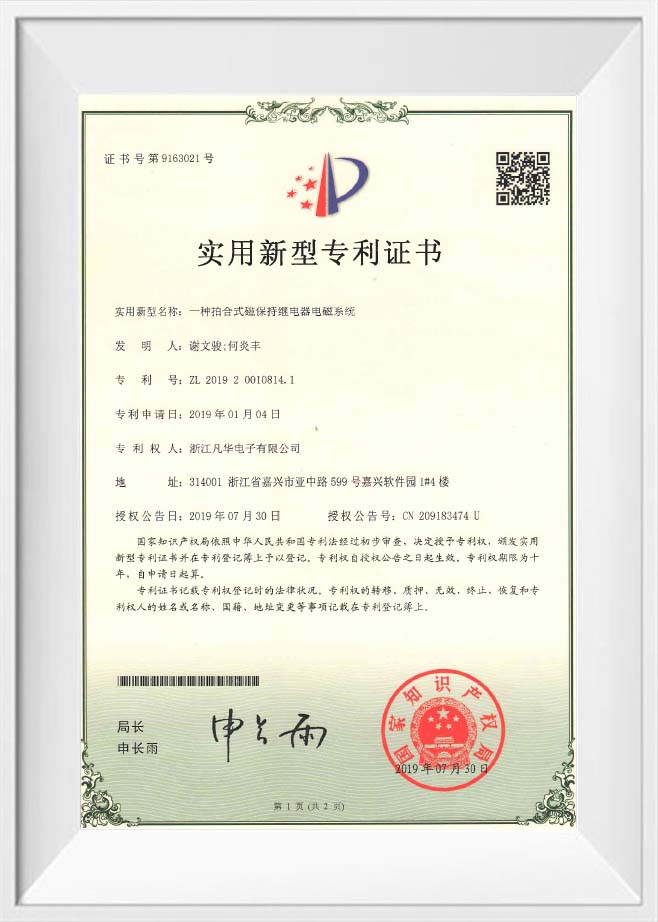
With a strong emphasis on technological innovation, we have been recognized as a National High-Tech Enterprise and Provincial R&D Center, holding more than 50 national patents. Our products have obtained international certifications, including ISO9001、ISO14001 and ISO45001, as well as authoritative UL、TUV and CQC certifications, fully complying with EU ROHS/REACH directives.
Maintaining a 98% delivery satisfaction rate, our products serve global industry leaders such as Huawei, Bull, and Eaton in smart home, industrial control, new energy, and power meter applications. Looking ahead, Fanhar Electronics will continue expanding production capacity and deepening our presence in the new energy market, striving to become a provider in the relay industry. We offer Protection Relay CT for sale.
Certificate Of Honor
News
-
-
Relays, as classic electrically controlled switching components, are powerful because they can use small current signals to control the switching and toggling of large current loads, and implement basic logic functions. This control method...
Read More -
With the rapid proliferation of new energy power generation, energy storage systems, and electric vehicle fast chargers, power relays—as critical switching components in circuits—play a vital role in determining the overall stability of e...
Read More -
South Asia's Premier Power & Energy Event – Three Shows in One with Unprecedented Scale POWERGEN India 2026 was held from September 1 to 3, 2026, at the Yashobhoomi – IICC in New Delhi, India. Co-located with Bharat Electricity and In...
Read More
CT Industry Knowledge
Mastering Current Sensing & Protection: A Deep Dive into Current Transformer and Current Sensor Transformer
In modern electrical systems—from smart homes to industrial automation and renewable energy—accurate current measurement and reliable protection are non-negotiable. The unsung heroes behind these functions are precision devices like the Current Transformer and its specialized variants. Understanding their distinct roles helps engineers and procurement specialists make informed decisions that enhance safety, efficiency, and system longevity.
1. Fundamental Concepts: Defining the Core Components
While often used interchangeably, Current Transformer (CT), Current Sensor Transformer, Current Measuring Transformer, and Protection Relay CT serve unique purposes. A standard Current Transformer steps down high primary currents to safe, measurable levels. The Current Sensor Transformer integrates signal conditioning for a direct microcontroller interface. The Current Measuring Transformer prioritizes high accuracy over a wide range for billing and monitoring. Finally, the Protection Relay CT is designed to remain linear during fault conditions, ensuring protective relays operate correctly.
- Current Transformer (CT): General-purpose, galvanically isolated sensing.
- Current Sensor Transformer: Embedded electronics for amplified/output signals.
- Current Measuring Transformer: High-accuracy (Class 0.5, 0.2) for revenue-grade metering.
- Protection Relay CT: High saturation knee point, for short-circuit detection.
2. Selection Criteria: Matching the Right CT to Your Application
Choosing between a Current Transformer and a Protection Relay CT depends on your system's priority: measurement fidelity or fault resilience. For energy management systems, a Current Measuring Transformer with 0.5% accuracy is ideal. Conversely, for motor protection relays or grid protection panels, a Protection Relay CT with 5P10 or 5P20 accuracy class is mandatory to avoid core saturation during surges.
2.1 Comparative Overview: Measurement vs. Protection CTs
The table below highlights critical differences when selecting between a standard Current Measuring Transformer and a Protection Relay CT for your next project.
| Feature | Current Measuring Transformer | Protection Relay CT |
|---|---|---|
| Primary Purpose | Billing, power quality analysis | Fault detection, relay tripping |
| Accuracy Class | 0.2, 0.5, 1.0 | 5P10, 5P20, 10P10 |
| Burden Rating | Lower (2.5-15 VA) | Higher (15-30 VA) |
| Core Material | Silicon steel (high μ) | Nickel-iron or advanced alloy |
| Saturation Behavior | Prone to saturation >120% In | Remains linear up to 20-30x In |
3. Technical Deep Dive: Current Sensor Transformer for Modern Electronics
With the proliferation of IoT and smart devices, the Current Sensor Transformer has evolved beyond a simple coil. Modern variants integrate burden resistors, amplifiers, and even analog-to-digital interfaces. This "sensor-ready" design reduces BOM complexity for smart meters, EV chargers, and industrial controllers.
- Output types: Voltage output (0-3.3V, 0-5V) or 4-20mA loop-powered.
- Frequency response: Optimized for 50/60 Hz, but wideband types up to 1 kHz available.
- Key specs to check: Phase angle error (critical for power factor correction) and isolation voltage (typically 3-5 kV).
- Integration tip: Choose a Current Sensor Transformer with built-in shielding to reject external magnetic fields in inverter-dense environments.
4. Application Focus: Protection Relay CT in New Energy & Industrial Control
In photovoltaic systems and charging piles, arc faults and ground overcurrents demand a robust Protection Relay CT. Unlike standard CTs, these devices maintain linearity up to 30 times the rated current, ensuring protection relays receive accurate signals during short circuits. For motor control centers (MCCs), pairing a Protection Relay CT with thermal overload relays prevents nuisance tripping while ensuring fail-safe operation.
- PV Combiner Boxes: Use 5P10 class CTs for string current monitoring plus DC-sensitive residual current detection.
- Charging Piles: Dual-core CTs (measuring + protection windings in one core) save space and reduce costs.
- Smart Meters: Require a current measuring transformer with 0.2S class for bidirectional metering (solar export/import).
5. Installation & Best Practices: Avoiding Common CT Pitfalls
Even a high-quality Current Transformer will fail if installed improperly. Always observe open-circuit secondary rules: never leave a CT secondary open while primary current flows—dangerous high voltages can occur. For Protection Relay CT installations, verify knee point voltage (Vk) is at least 2x the maximum relay voltage under fault conditions. Use shorting blocks for safe disconnection.
- Polarity: Mark P1/P2 (primary) and S1/S2 (secondary). Reversed polarity causes incorrect power readings.
- Burden matching: Exceeding the VA rating of a Current Measuring Transformer increases ratio error by 0.5%-2%.
- Cable length: For secondary leads >10 meters, increase wire gauge to keep loop resistance <25% of rated burden.
FAQ: Your Top Questions on Current Transformers, Protection CTs, and Measuring Sensors
1. What is the difference between a Current Measuring Transformer and a Protection Relay CT?
A Current Measuring Transformer is optimized for high accuracy (0.2–1.0%) at normal operating currents, typically up to 120% of rated primary current. It uses lower saturation cores and is suited for energy metering and power monitoring. In contrast, a Protection Relay CT is designed to maintain linearity under fault conditions (up to 20–30x rated current) with accuracy classes like 5P10 or 10P20. Its core has a higher saturation knee point, ensuring relays operate correctly without distortion. Using a measuring CT for protection can lead to core saturation and relay non-operation during short circuits.
2. How do I select the right Current Sensor Transformer for a microcontroller (e.g., Arduino or STM32) project?
For a direct microcontroller interface, choose a Current Sensor Transformer with built-in signal conditioning. Look for voltage output models (0-3.3V or 0-5V) that match your ADC reference. Key parameters: turns ratio (e.g., 1000:1), output sensitivity (mV/A), and phase error (<1°). Alternatively, select a standard CT plus an external burden resistor and an op-amp circuit. For precision, use a CT with a built-in precision burden and a rail-to-rail output amplifier. Many designs also include a DC offset (e.g., 2.5V for bipolar current sensing).
3. Why does my Current Transformer read zero or low current after installation?
Common causes include: (1) Open secondary circuit — never leave secondary unloaded; always place a burden resistor or shorting block. (2) Incorrect core clamping — split-core CTs must click fully shut; dirt or misalignment reduces coupling. (3) Wrong wiring polarity — swap S1/S2 leads. (4) Insufficient primary current — CTs have a minimum starting current (typically 0.5-1% of rated). (5) Secondary burden too high — reduce cable length or increase wire gauge. Use a clip-on meter to verify that primary current exists before troubleshooting the CT.
4. Can a Protection Relay CT be used for energy measurement?
Technically, yes, but it's not recommended. A Protection Relay CT sacrifices low-current linearity for high fault tolerance. At currents below 5-10% of rated, its error can exceed 2-3%, making it unsuitable for accurate energy billing or power analysis. For measurement purposes, always use a dedicated Current Measuring Transformer (Class 0.5 or 0.2). Conversely, a measuring CT should never be used in protection circuits — it will saturate during a fault, causing protection relays to fail.
5. What certifications should I look for when sourcing a Current Transformer for global markets?
For safety and compliance, demand UL 2808 (US/Canada), IEC 61869-2 (international standard for CTs), and TUV (Europe). For environmental compliance, require RoHS and REACH declarations. In PV and EV charging applications, look for UL 1741 or IEC 62053 for measurement CTs. For Protection Relay CT, verify IEC 61869-2 classes (e.g., 5P10) and optionally VDE 0414. Reputable manufacturers also provide ISO 17025 calibration certificates. Always request test reports for ratio error, phase displacement, and knee point voltage.

- Tel +86-573-82237888
- Email [email protected]
- Address No. 828, Xinchang Road, Nanhu District, Jiaxing, Zhejiang, China
Products
