 EN
EN
 English
 Español
 русский
 简体中文
简体中文

News
Home / News / Industry News / Circuit Breaker vs Relay: How a Circuit Breaker Relay Works and How to Choose
Content
Imagine you are building a control panel for a smart meter or an industrial machine. You have already identified the fault current path, but you still need to decide where a circuit breaker, a relay, or both belong on that rail. The short answer is that a relay is a switching and control device, while a circuit breaker is a protection device. A circuit breaker relay (also called a protective relay) is the component that links the two because it tells the breaker to open when something goes wrong.
In most protection systems, a circuit breaker and a relay work together: the relay senses abnormal conditions and the breaker interrupts the current.
This guide explains the difference between the two, how a protective relay drives a circuit breaker, and which specification matters when you are selecting a relay for circuit breaker control.
A relay is an electrically operated switch that uses a small control current to switch a larger load current. A circuit breaker is an automatically operated switch that protects a circuit from damage caused by overloads or short circuits. A circuit breaker relay, in the professional sense, is a protective relay that detects faults and sends a trip signal to the circuit breaker.
Sometimes people use the term to describe a relay that is physically integrated with a breaker, but in broad electrical engineering, it refers to the protection relay that makes the breaker operate. This is an important distinction for buyers because it affects how you wire the control panel and what component you spec for the protection loop.
Both devices are switches, but their jobs are different. The table below compares the main characteristics you will encounter in product datasheets and application manuals.
| Aspect | Relay | Circuit Breaker |
|---|---|---|
| Primary function | Control and switching | Automatic fault protection |
| Working principle | Electromagnetic coil opens or closes contacts | Thermal or magnetic trip unit opens contacts |
| Operation method | Low-power control signal | Self-triggered by fault current |
| Typical voltage level | From millivolts to hundreds of volts | From 120V residential to high-voltage utility |
| Arc suppression | Often not required or limited | Built-in arc chutes and quenching |
| Application focus | Logic, isolation, automation | Distribution, branch protection, safety |
Despite the differences, both share a common design goal: reliable contact performance under repeated load and fault conditions. The similarity is important when you select a relay for a circuit-breaker control circuit. The relay’s contacts must be rated for the trip coil current of the breaker, and the coil must be compatible with the control voltage that the protection logic provides.
The protection loop starts with a current sensor. In a typical installation, a current transformer (CT) reduces the main conductor current to a low-level signal that a relay can process. The relay compares that signal to a setpoint. When the current exceeds the setpoint, it energizes the trip coil of the circuit breaker, and the breaker opens.
This is why accurate current sensing is critical. A CT with poor linearity or high phase error may cause the relay to trip too late or to nuisance-trip during normal load swings. For applications such as industrial power distribution monitoring, a precision current sensing transformer provides the stable, low-error signal that a protective relay needs to make a correct decision.
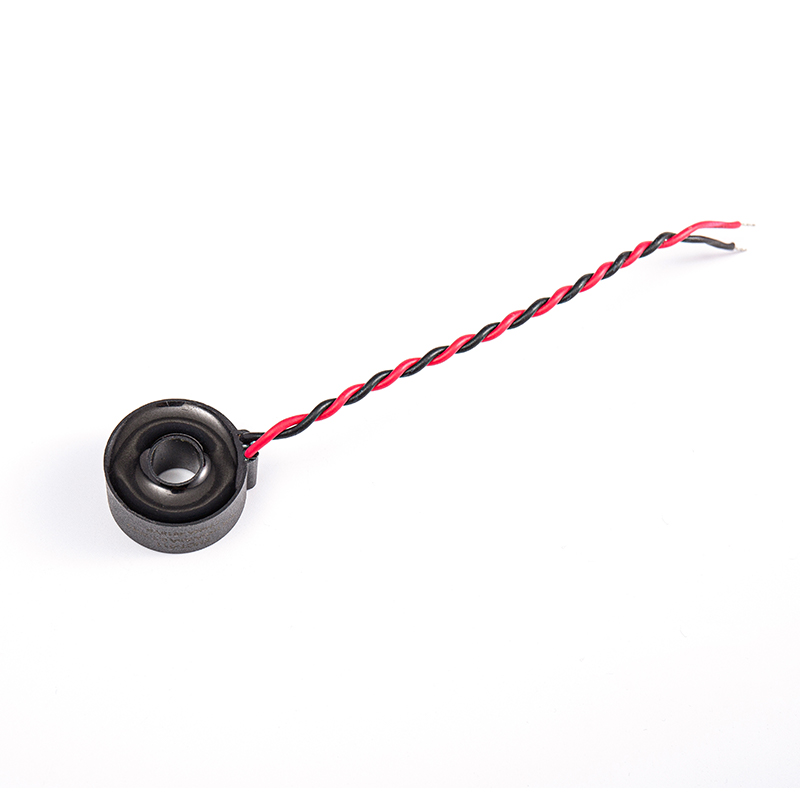 FHCT-011 Precision Current Sensing Transformer for Reliable MonitoringThis split-core transformer offers high linearity and stability over a wide temperature range, making it ideal for precise current measurement in industrial systems where accurate sensing is critical for relay decisions.View Product →
In many modern designs, the protective relay itself is a programmable or static relay rather than an electromechanical device. But the external components—the CT, the control power supply, and the output contacts—still determine the overall reliability. Choosing a relay with a small coil power consumption and robust contact rating reduces the chance of upstream controller failure.
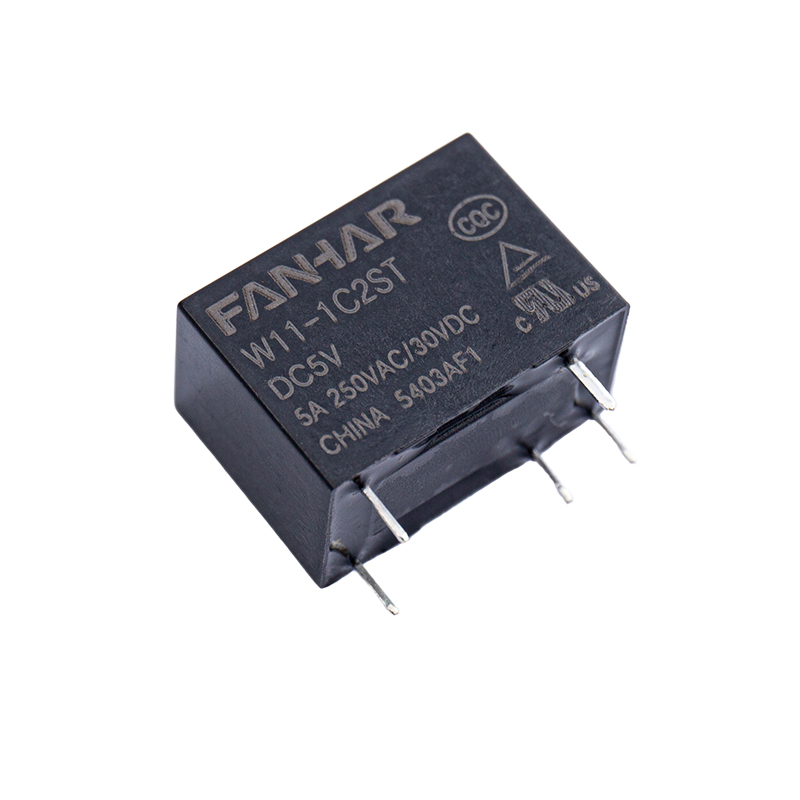
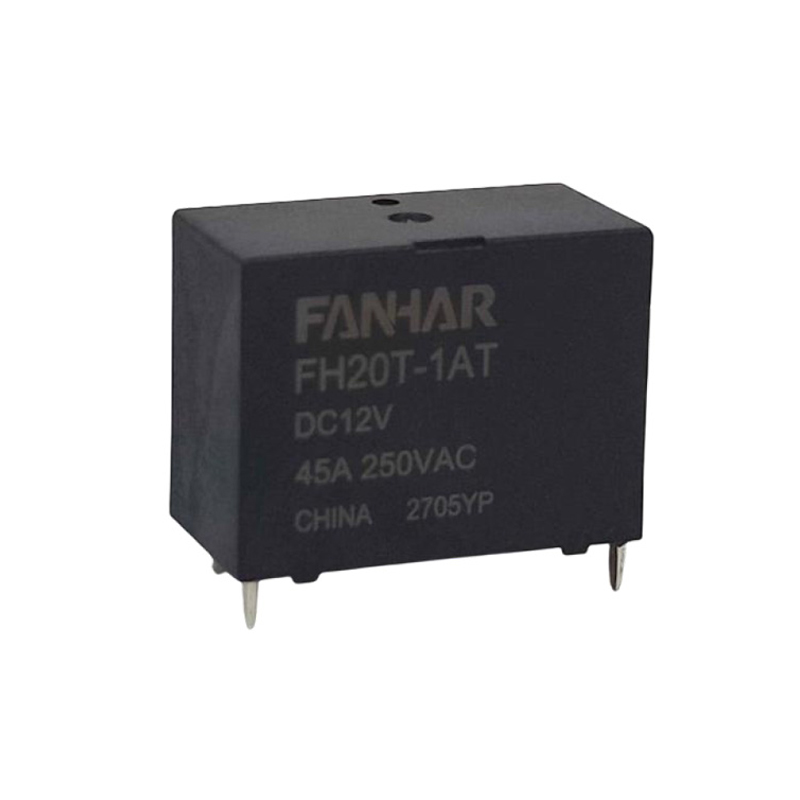
When you select a relay for a breaker trip or control circuit, start by specifying the coil voltage and the contact rating. If the relay is mounted in an industrial panel, the ambient temperature and clearances matter as much as the electrical data. Look for certifications such as UL, TUV, or CQC, especially if the final product will be exported.
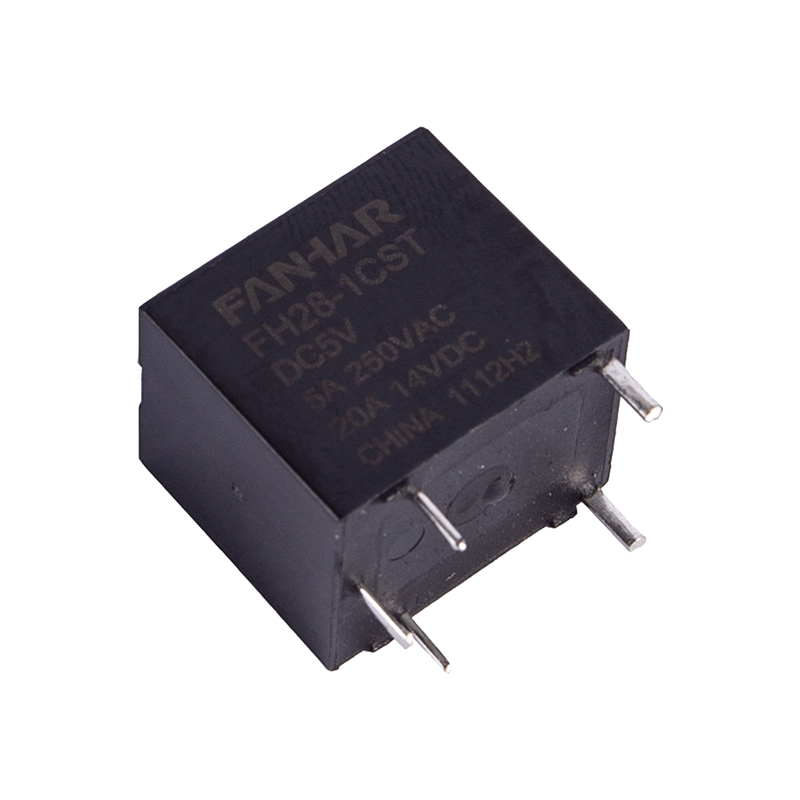
Mechanical durability also drives long-term cost. A relay that opens and closes thousands of cycles per month will need a contact life that matches the application. For example, an industrial relay with a bifurcated double-contact structure can improve contact reliability in industrial control systems where vibration and dust are present. The FH19 industrial relay is one option that offers this contact structure and is available with UL/TUV/CQC compliance.
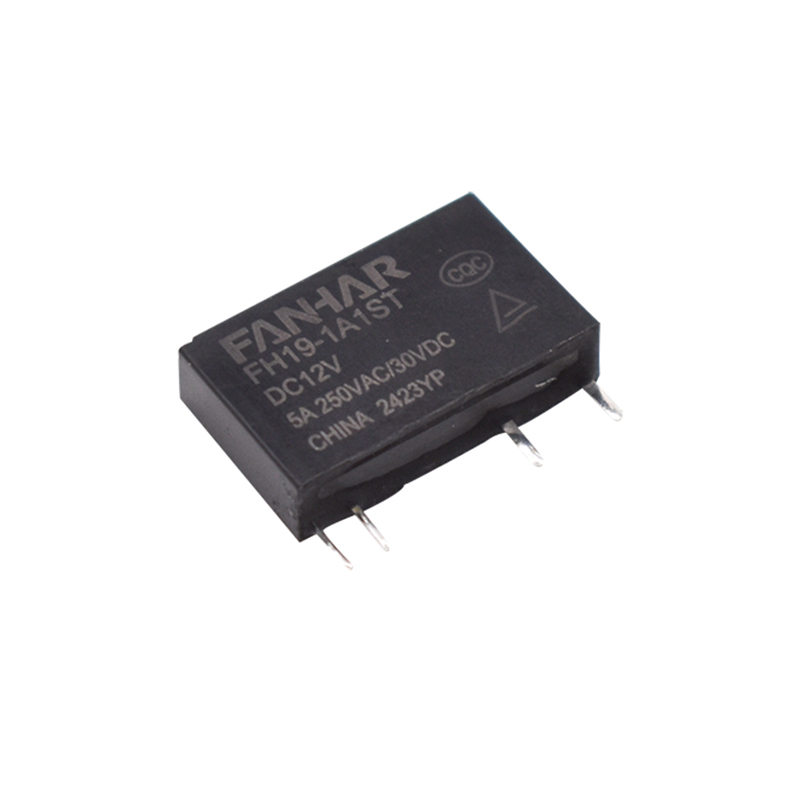 FH19 Industrial Relay with Bifurcated Contacts for High-Density ControlWith a slim 5mm profile and bifurcated double contacts, this UL/TUV/CQC compliant relay ensures reliable switching in dusty or vibrating environments, suitable for compact industrial control panels.View Product →
Do not forget the coil drive. If your control system provides a DC voltage, you need to know the coil resistance and sensitivity. A high-impedance coil may allow a smaller driver, but it also can be more sensitive to noise. For 105°C environments, a high-temperature-rated relay prevents contact resistance from increasing over time.
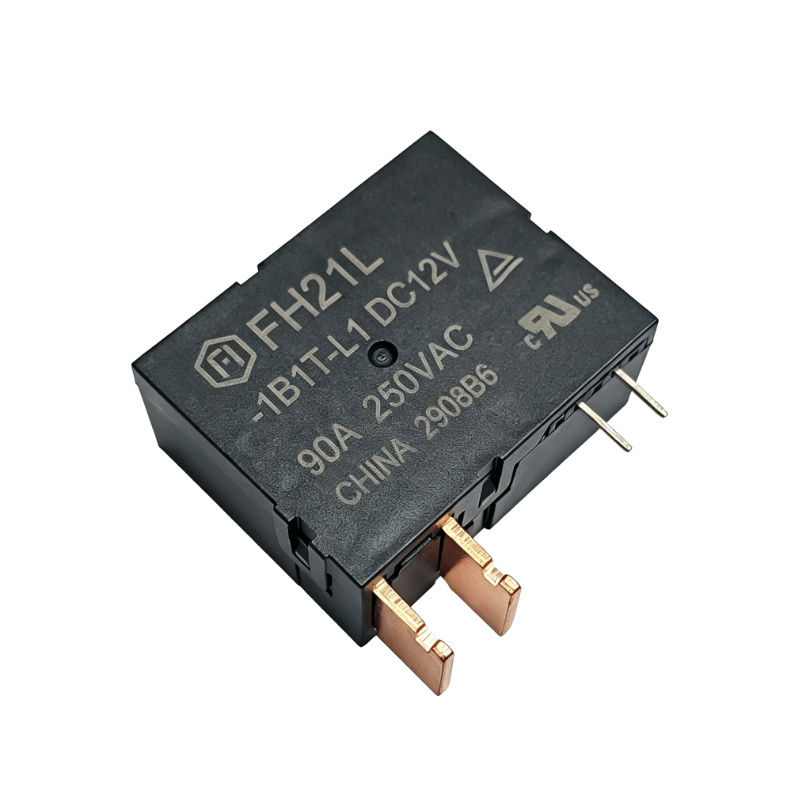
In smart electricity meters, latching relays are common because they hold their state without continuous coil power. They work with the meter’s control circuit to disconnect the load when a fault or a credit limit is reached. The same relay logic applies to lighting control and smart home automation, where a FH39/FH39S power relay for smart home can switch household appliances and HVAC loads safely.
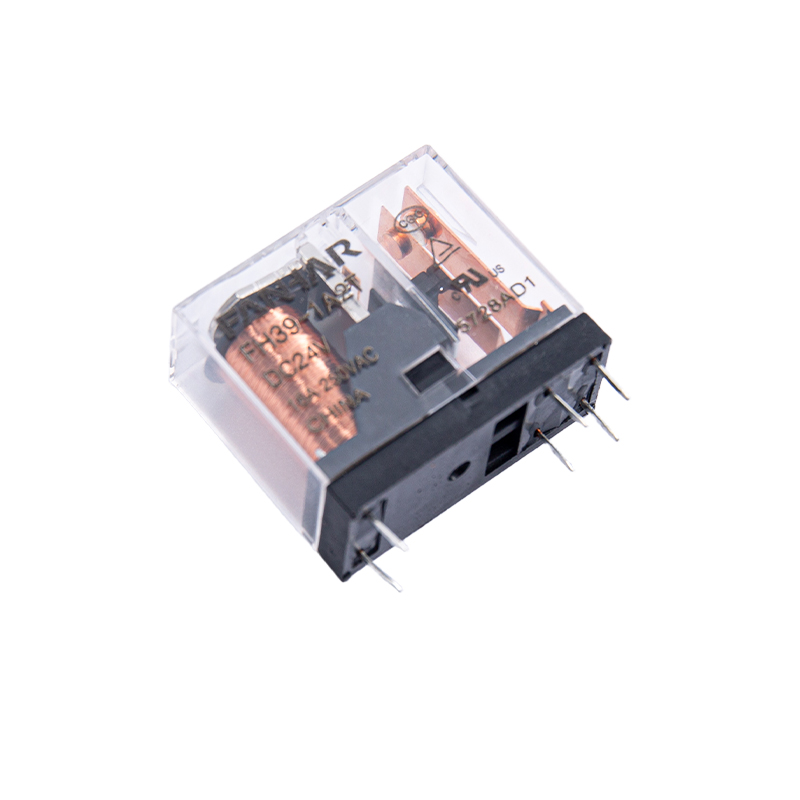 FH39/FH39S Power Relay for Smart Home and Industrial Load SwitchingFeaturing 20A switching capability and optional socket installation, these relays handle high inrush currents in smart meters, lighting, and HVAC systems, while maintaining durable insulation and compact dimensions.View Product →
In industrial panels, a circuit breaker provides the primary protection, while a relay provides the remote control and interlock logic. In renewable energy systems, relays are selected for high switching capacity because solar inverters and charging piles present significant inrush and fault currents. In all these cases, the relay and the breaker are complementary, not interchangeable.
Modern manufacturers also use current transformers and shunts for accurate energy metering and power management. In a smart electricity meter, the relay is controlled based on current measurements from a CT or shunt, and the breaker protects the service entrance. This combination allows both safety and utility functions to coexist in a compact footprint.
One common mistake is to assume that a relay can replace a circuit breaker. A relay does not have the same arc extinction or overload trip characteristics, so using it as sole short-circuit protection can lead to contact welding and fire. On the other hand, using a circuit breaker as a control relay often results in slow switching and high coil noise.
Another risk is ignoring the coil voltage tolerance. A relay specified for 24V DC may drop out at 21V or chatter at 23V if the control supply is not regulated. Always check the operating voltage range and the release voltage.
Finally, do not overlook the contact material. Silver-tin-oxide (AgSnO2) contacts resist welding and erosion better than plain silver under inductive loads. When you compare products, ask for the contact material and the switching current rating at the voltage you actually use.
No, a relay is not designed to interrupt short-circuit currents. A circuit breaker has trip units and arc-quenching structures that allow it to open safely during fault conditions. A relay can control a breaker, but it should not serve as the primary protection device.
In protection engineering, a circuit breaker relay is a protective relay that monitors system conditions and sends a trip command to a circuit breaker. It is the sensing and logic component, while the breaker is the interrupting component.
Electromechanical relays are typically more cost-effective and simpler to service. Solid-state relays offer faster switching and lower coil power. For circuit breaker control, electromechanical relays are still widely used because the trip time is not critical and they offer galvanic isolation.
At minimum, look for UL, TUV, and CQC marks if your product is sold in North America, Europe, or China. Also check whether the relay meets ROHS/REACH requirements for materials and environmental compliance.
When you have a clear picture of what the relay and the breaker each do, the selection process becomes straightforward. Use a relay when you need switching and control; use a circuit breaker when you need automatic fault protection. In a protection loop, select a relay with a robust contact rating, a coil voltage that matches your control supply, and certifications that your target market demands. If you involve an experienced supplier early, you can reduce prototype iterations and meet the reliability level your application needs.
If you have any questions, please fill out the contact form at the bottom of the page and contact us.

 Previous