
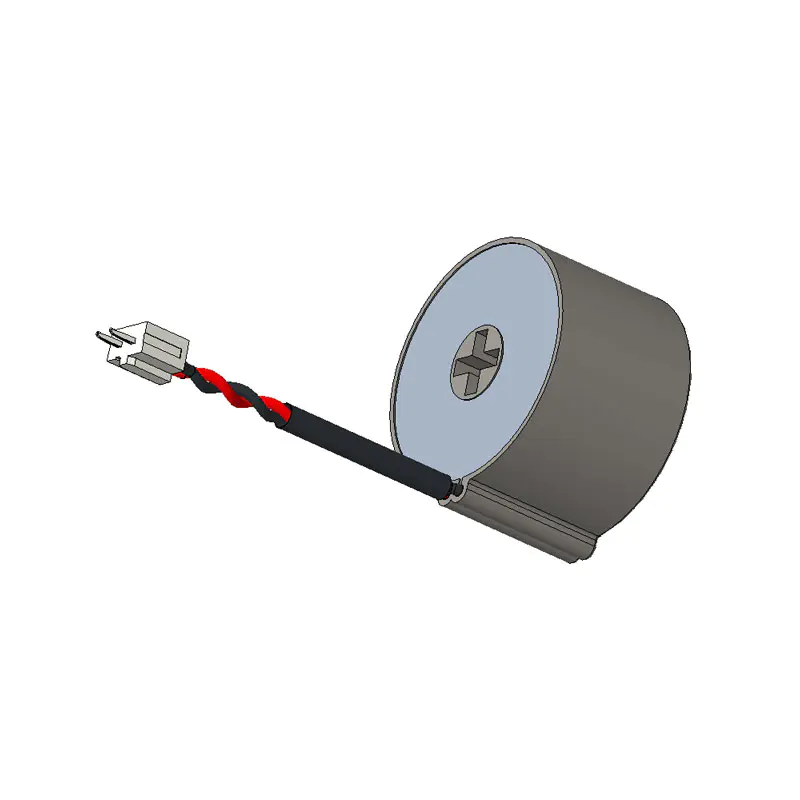
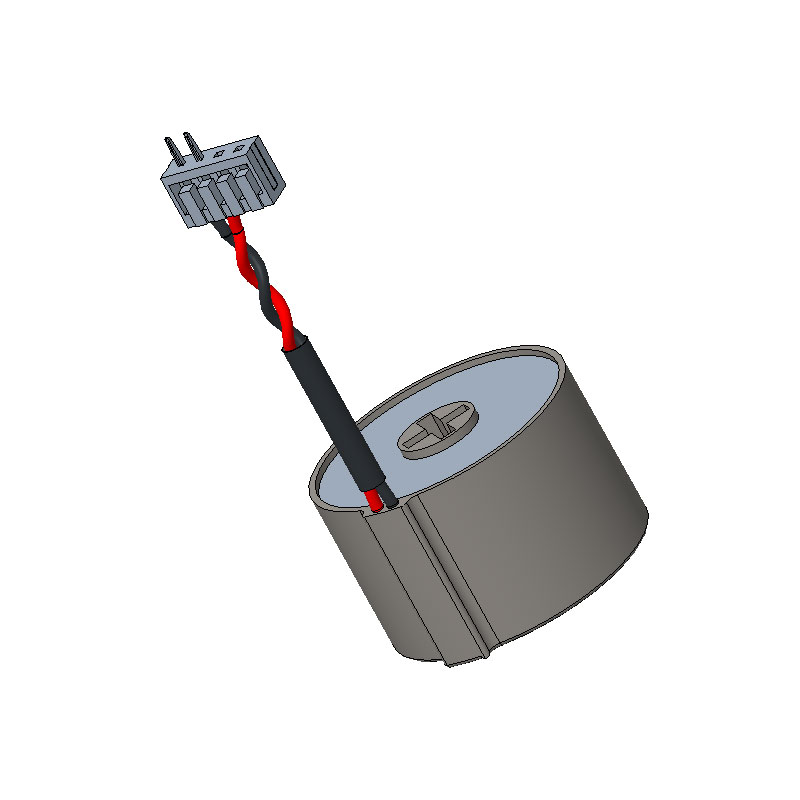
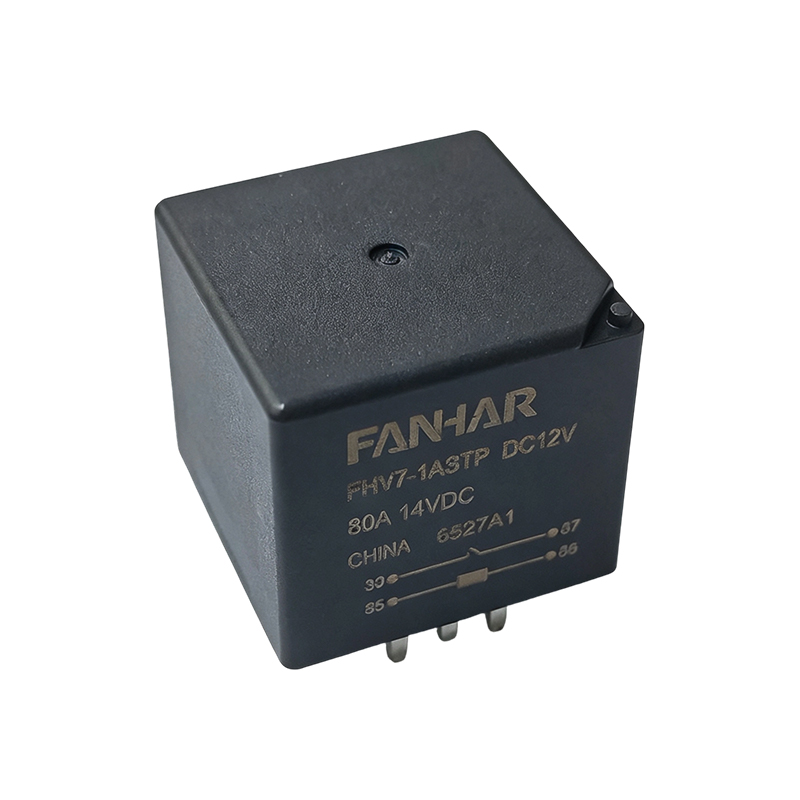
PCB mount relays are electromechanical or solid-state switching devices designed to be soldered directly onto a printed circuit board. Instead of relying on a socket or panel bracket, the relay's pins pass through plated holes and are reflow- or wave-soldered in place, which shortens the current path, reduces contact resistance and frees up panel space inside compact enclosures.
At Fanhar, PCB mount relays sit at the core of our power relay and signal relay lineups, covering coil voltages from 5VDC to 24VDC and switching currents from 2A signal-level loads up to 40A high-power loads, so a single family can serve everything from smart meters to EV charging piles.
Structure & Working Principle
A PCB mount relay is built around four core elements working together to translate a low-power control signal into a high-power switching action:
- Coil — generates a magnetic field once energized by the control circuit.
- Armature — the moving element pulled by the magnetic field to open or close the contact path.
- Contacts — silver-alloy contact points where the load circuit is actually made or broken.
- Return spring — resets the armature to its normal position once the coil is de-energized.
This design allows a small control current, often just a few milliamps, to safely switch loads that would otherwise require heavy-duty wiring and panel-mounted switchgear.
Key Specifications
| Parameter | Typical Range |
|---|---|
| Coil Voltage | 5VDC – 24VDC |
| Switching Current | 2A – 40A |
| Dielectric Strength (coil–contact) | Up to 2500VAC |
| Mounting | Through-hole PCB, reflow / wave solderable |
| Contact Form | 1A / 1B / 1C / 2C |
| Certifications | UL / CUL / VDE / TÜV / CQC |
Where PCB Mount Relays Are Used
- Smart meters and metering front-ends requiring compact, board-level switching.
- Industrial control panels and spot-welding equipment with high inrush currents.
- Photovoltaic inverters, energy storage systems and EV charging piles.
- Home appliances such as air conditioners, water heaters and small kitchen equipment.
How to Select the Right PCB Mount Relay
Match the coil voltage to your control circuit, size the contact rating with a safety margin above your peak load current, and confirm the dielectric strength and certification set required for your target market before finalizing a part number. Our engineering team can also provide customized coil, terminal or bracket variants for OEM projects.