 EN
EN
 English
 Español
 русский
 简体中文
简体中文

News
Content
- 1 Relay Basics: From Electromagnet to Intelligent Terminal
- 2 Five Core Applications of Relays in Smart Grids
- 3 Three-Dimensional Value Enhancement of Relays in Smart Grids
- 4 Future Development Trends: From Actuator to “Edge Decision Node”
- 5 Conclusion
- 6 Frequently asked questions
- 6.0.1 Q1:What is the essential difference between relays in smart grids and those in traditional grids?
- 6.0.2 Q2: Are solid-state relays truly more reliable than electromagnetic relays?
- 6.0.3 Q3: How do relays defend against cyberattacks?
- 6.0.4 Q4: What special requirements must relays meet for distributed PV grid connection?
- 6.0.5 Q5: Will relays be completely replaced by power electronic switches in the future?
Global energy transformation is advancing at an unprecedented pace. According to the International Energy Agency (IEA), renewable energy sources are expected to account for nearly 40% of global electricity generation by 2030, while the number of electric vehicles on the road is projected to exceed 200 million. This trend places extremely high demands on the flexibility, reliability, and interactivity of power grids. The Smart Grid has emerged as a response—integrating advanced sensing, communication, control, and cloud computing into traditional power networks, endowing the grid with the capabilities of “self-perception, self-decision, and self-restoration.”
Within the vast architecture of the smart grid, relays, though small in size, serve as both the “first line of defense” and the “execution terminus” for safe, stable, and efficient system operation. They undertake multiple responsibilities, ranging from fault isolation and load switching to equipment protection and energy dispatching. This article starts from basic principles, systematically reviews the core application scenarios of relays in smart grids, analyzes their tangible improvements to grid performance, and looks ahead to future technology evolution paths. Finally, a list of frequently asked questions (FQA) is provided for quick reference.
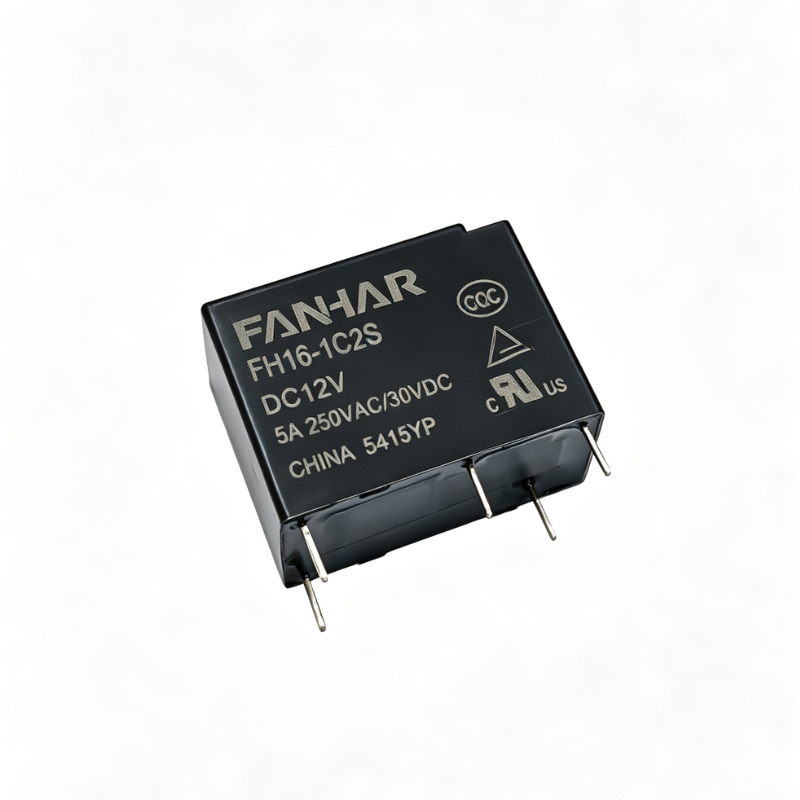
Relay Basics: From Electromagnet to Intelligent Terminal
Operating Principle and Classification
A relay is an automatic electrical switch. Its basic operating principle is: when the input quantity (such as voltage, current, temperature, time, etc.) reaches a set threshold, an electromagnet or electronic circuit drives the contacts to act, thereby controlling the on/off of a high-power circuit. According to technical routes, relays can be classified as follows:
| Type | Characteristics | Typical Applications |
|---|---|---|
| Electromagnetic relay | Simple structure, low cost, but mechanical contact wear exists | Traditional substations, low voltage distribution |
| Solid-state relay (SSR) | No moving parts, microsecond response, long life | High frequency switching, precision control, renewable energy inverters |
| Thermal relay | Uses bimetallic strip thermal effect, reliable overload protection | Motor overload protection |
| Digital / intelligent relay | Integrated microprocessor, communication interface, programmable logic | Smart substations, distributed energy resource (DER) grid connection |
Traditional Roles in Power Systems
Control function: Uses small-current signals to drive high-current loads, enabling remote start/stop.
Protection function: Detects overcurrent, overvoltage, undervoltage, short circuits, and other anomalies, quickly disconnecting faulty circuits.
Signal transmission: Converts equipment status (closed/open, alarm) into dry contact signals for monitoring systems.
Five Core Applications of Relays in Smart Grids
Smart Substations and Primary Equipment Control
Smart grids are built upon digital substations, extensively employing electronic instrument transformers and intelligent primary equipment (e.g., smart circuit breakers, disconnecting switches). Relays act as control actuators, receiving GOOSE (Generic Object Oriented Substation Event) commands from merging units or protection and control devices, completing switching operations within milliseconds.
Case in point: After a 220 kV smart substation renovation in China, the replacement of traditional electromagnetic relays with intelligent relay groups reduced the average operating time from 80 ms to 15 ms, improving system fault clearance speed by approximately 80%.
Grid Fault Self Healing and Rapid Reconfiguration
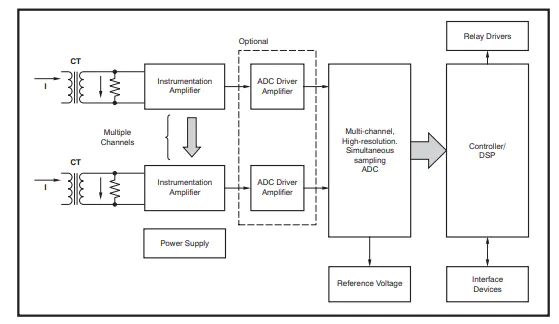
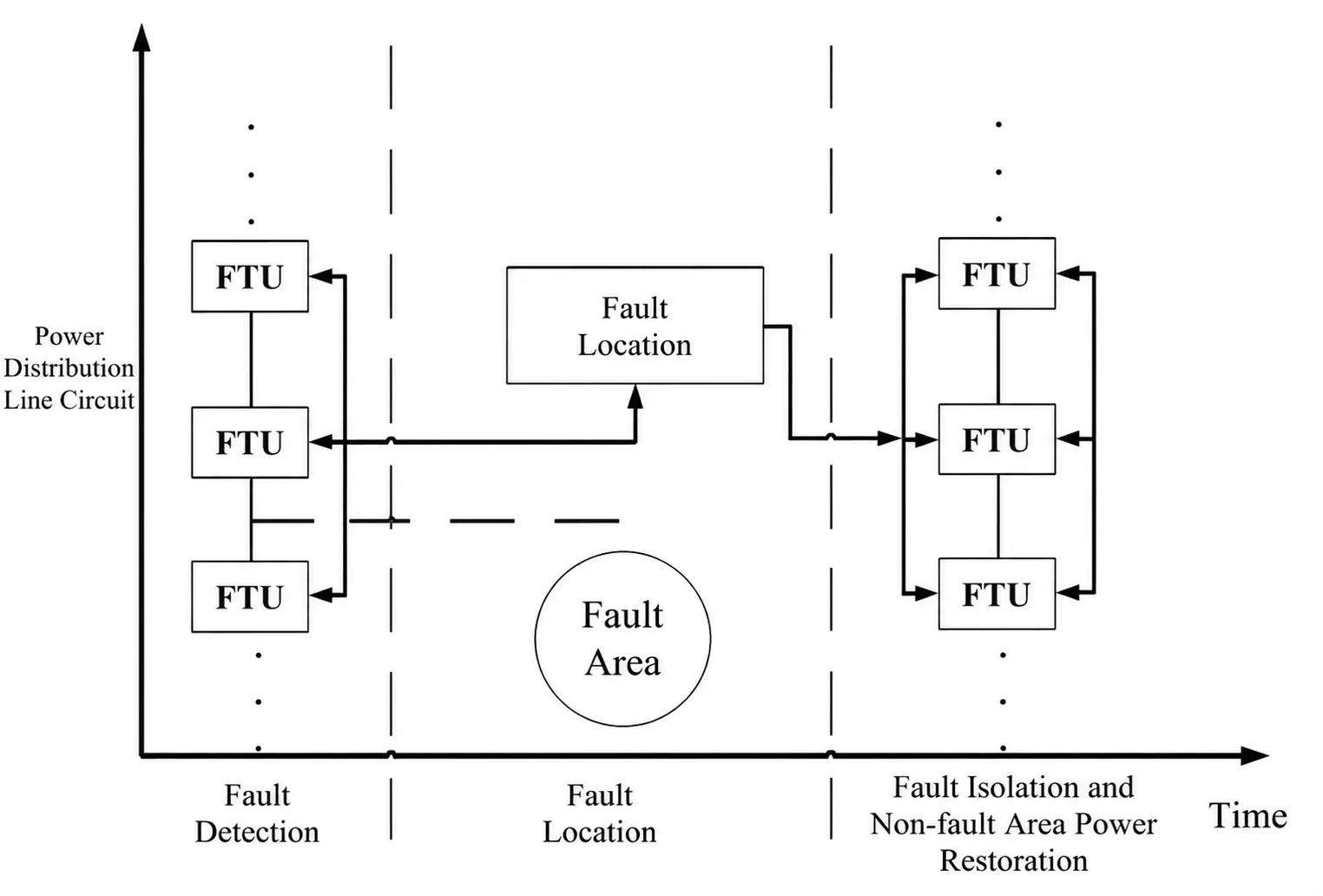
The “self-healing” capability of smart grids relies on a closed-loop process: fault detection → location → isolation → restoration. Relays play a dual role in this process:
Fault isolation: When a short circuit occurs on a line, relays act instantaneously to separate the faulty section from the main grid.
Automatic reconfiguration: Through feeder automation (FA) logic, relays coordinate adjacent switches to transfer non-faulty sections to backup power sources, compressing restoration time from hours to minutes or even seconds.
Precise Load Control and Demand Response
During periods of tight power supply-demand balance, smart grids use demand response (DR) mechanisms to regulate customer-side loads. Relays are no longer just “hard switches”; they work in conjunction with load aggregation platforms:
Time-of-use price response: Based on price signals, relays automatically disconnect or adjust non critical loads (e.g., air conditioners, EV chargers).
Emergency load shedding: When frequency drops, relays sequentially disconnect interruptible loads according to priority, preventing large-scale blackouts.
According to U.S. Department of Energy statistics, commercial buildings using intelligent relays for demand response can reduce summer peak loads by 15%–25%, with minimal impact on occupant comfort.
Friendly Grid Connection of Distributed Energy Resources (DER)
The widespread integration of photovoltaics (PV), wind power, energy storage, and electric vehicles transforms distribution networks from “unidirectional radial” to “bidirectional interactive” systems. Key tasks of relays at DER interconnection points include:
Active anti-islanding detection: When grid voltage is lost, relays quickly disconnect distributed generators to prevent islanding operation that could endanger maintenance personnel.
Power smoothing control: Depending on weather conditions, relays dynamically switch energy storage devices or adjust inverter outputs to smooth power fluctuations.
Multi-source coordination: In microgrids, relays serve as “gateway switches” to dispatch different energy sources according to economic or environmental priorities
Full-Lifecycle Health Management of Equipment
Modern intelligent relays incorporate built-in temperature, voltage, and current sensors, and support the IEC 61850 communication protocol. They can upload status data such as operation count, contact wear, and operating time. Maintenance platforms, combined with machine learning models, predict the remaining useful life of relays, enabling condition-based maintenance rather than scheduled maintenance, reducing O&M costs by about 30%–40%.
Three-Dimensional Value Enhancement of Relays in Smart Grids
| Dimension | Contribution | Quantitative Evidence |
|---|---|---|
| Energy efficiency | Reduces line losses and transformer no-load losses; shaves peaks and fills valleys through demand-side management | Studies show that coordinated dispatching via intelligent relays can reduce overall distribution network line losses by 6%–8% |
| Supply reliability | Millisecond-level fault clearing prevents equipment burnout and fire spread; supports hardware-encrypted trip commands against cyberattacks | Complies with GB/T 14598 and IEEE C37.90 series anti interference standards |
| Safety and resilience | Millisecond-level fault clearing prevents equipment burnout and fire spread; supports hardware-encrypted trip commands against cyberattacks | Complies with GB/T 14598 and IEEE C37.90 series anti interference standards |
Future Development Trends: From Actuator to “Edge Decision Node”
Intelligence and AI Integration
The next generation of relays will integrate edge AI chips, enabling local waveform feature recognition to distinguish between “lightning-induced transient faults” and “permanent short circuits,” and autonomously select reclosing strategies—avoiding secondary impacts on the system from blind reclosing. It is expected that self-learning intelligent relays will enter pilot projects around 2028.
Software-Defined and Virtualization
With the rise of the software-defined power system concept, relay protection logic will no longer be hardcoded as fixed hardware parameters, but will be loaded on demand via cloud-based apps. For example, the same hardware can run a “PV anti-reverse-power” strategy during the day and switch to an “energy storage charge/discharge management” strategy at night, achieving “one device, multiple uses.”
High-Frequency Operation and Wide Bandgap Semiconductors
The maturation of silicon carbide (SiC) and gallium nitride (GaN) devices is pushing solid state relays toward MHz-level high-frequency switching. This will reduce the volume of relays used in power electronic transformers (PET) and medium-voltage DC distribution networks (MVDC) by more than 50%, while cutting losses to one third of conventional solutions.
Digital Twin-Driven Operation and Maintenance
In the future, every relay will have a “virtual mirror” in a digital twin platform, reflecting its electrical, thermal, and mechanical states in real time. Through simulation, potential failure modes can be predicted weeks in advance, allowing replacement at the optimal time window—truly achieving “zero unplanned downtime.”
Conclusion
As a “small but critical” component of smart grids, relays have evolved from simple electromechanical switches to multifunctional intelligent terminals that integrate sensing, communication, control, and computation. They play an irreplaceable role in improving energy utilization efficiency, enhancing supply reliability, and ensuring system safety. Facing future grids with high penetration of renewables, high power-electronic content, and high digitalization, relays will continue to evolve toward being smarter, faster, more flexible, and more reliable. Technological innovation, coupled with standardization efforts, will jointly drive the relay industry to provide a solid underlying support for global carbon-neutrality goals.
Frequently asked questions
Q1:What is the essential difference between relays in smart grids and those in traditional grids?
Traditional relays are mostly electromagnetic or thermal types, with single functions, fixed settings, and no communication capability. Smart grid relays, on the other hand, employ microprocessors and digital communication interfaces, supporting remote setting, self-diagnosis, fault recording, and coordinated interaction—they are cyber-physical integrated devices.
Q2: Are solid-state relays truly more reliable than electromagnetic relays?
Solid-state relays have no mechanical contacts, thus no arcing or contact wear, and offer significantly longer life in frequent-operation scenarios. However, they have weaker overload tolerance and exhibit on-state voltage drop and leakage current. The choice should be based on specific application conditions (AC/DC, voltage level, switching frequency, etc.).
Q3: How do relays defend against cyberattacks?
Modern intelligent relays support message encryption and digital signature authentication based on national cryptographic algorithms, while using hardware security chips to store keys. Trip commands employ a “double confirmation” mechanism (e.g., GOOSE + SV cross checking) to effectively prevent forged control instructions.
Q4: What special requirements must relays meet for distributed PV grid connection?
They must comply with GB/T 37408 2019 Technical Requirements for Photovoltaic Grid-Connected Inverters, including anti-islanding protection (passive/active detection), over/under voltage protection, over/under frequency protection, and reconnection delay, as well as low-voltage ride through (LVRT) capability.
Q5: Will relays be completely replaced by power electronic switches in the future?
No. Power electronic switches (e.g., IGBTs, MOSFETs) are suitable for high-frequency, fast-regulation scenarios, but relays—especially hybrid relays—still have unique advantages in high-voltage isolation, safe disconnection, and low-cost high-current switching. The future trend is a combination of both, forming a hybrid scheme of “power electronic regulation + relay backup isolation.”
 Previous