 EN
EN
 English
 Español
 русский
 简体中文
简体中文

News
Home / News / Industry News / What Are the Differences Between a Relay, a Fuse, and a Circuit Breaker?
Content
Electrical systems rely on discrete components to achieve safe operation, fault mitigation, and precise control. Among the most commonly misunderstood devices are relays, fuses, and circuit breakers. Although they often reside in the same panel, each serves a distinct role: control, sacrificial overcurrent protection, and resettable fault interruption. This article dissects relay vs fuse dynamics, the difference between relay and fuse, and how relay and circuit breaker assemblies interact. We also explore fuse vs relay trade-offs and relay fusible concepts, backed by technical data, application tables, and a visual decision flow.
Engineers and maintenance technicians must understand overcurrent protection principles, short circuit behavior, automatic reset capabilities, sacrificial element characteristics, galvanic isolation, and the use of current transformer (CT) for protection relaying. By the end of this guide, you will be able to select the correct device based on fault current level, required lifespan, isolation needs, and control architecture.
A relay vs fuse comparison starts with physics: relays are electromagnetically actuated switches, while fuses exploit the joule heating effect. Circuit breakers combine thermal and magnetic trip mechanisms or electronic sensing.
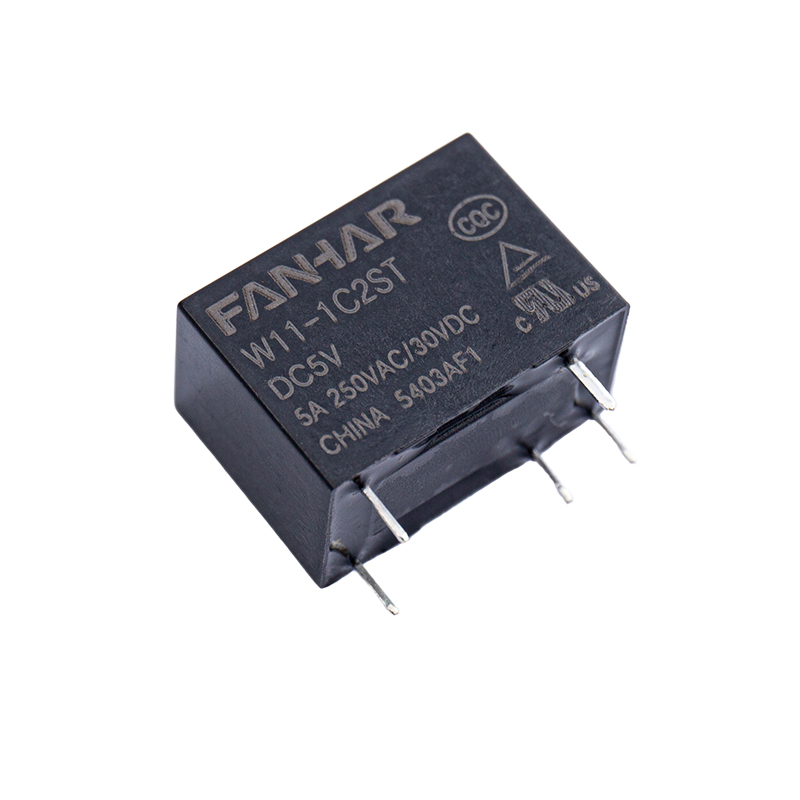
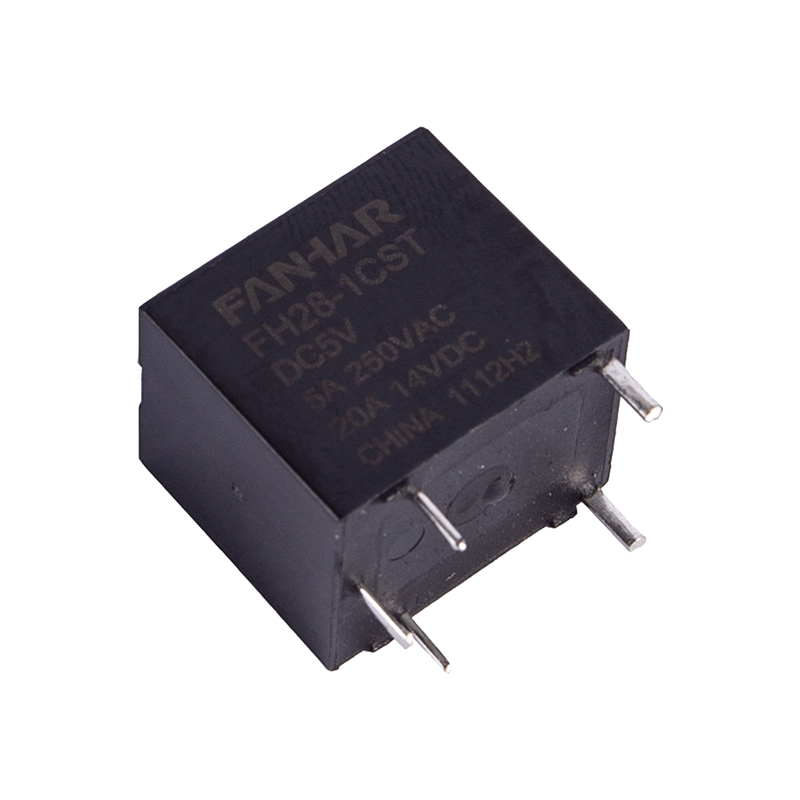
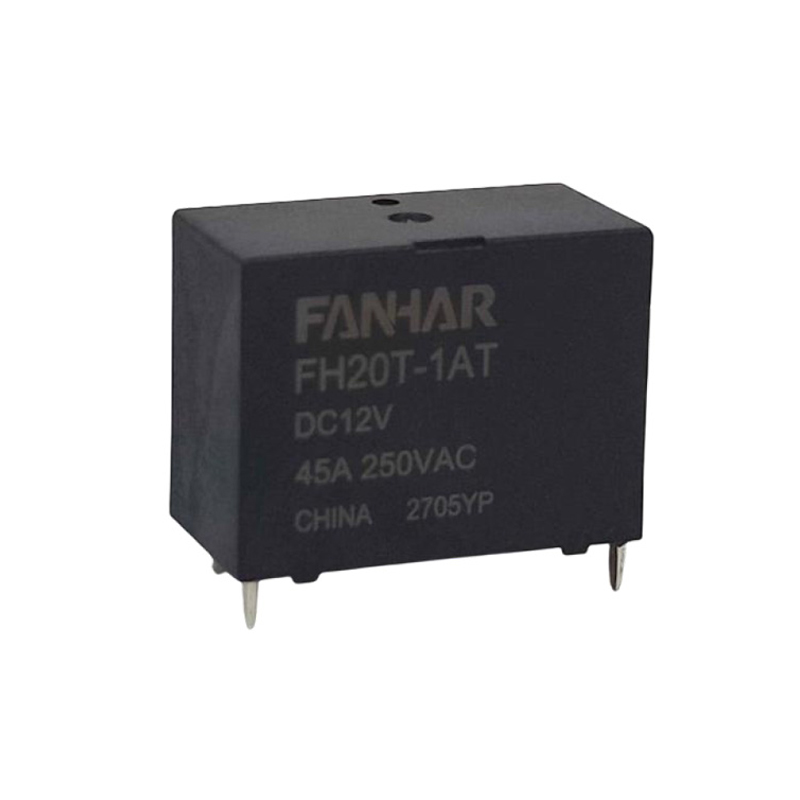
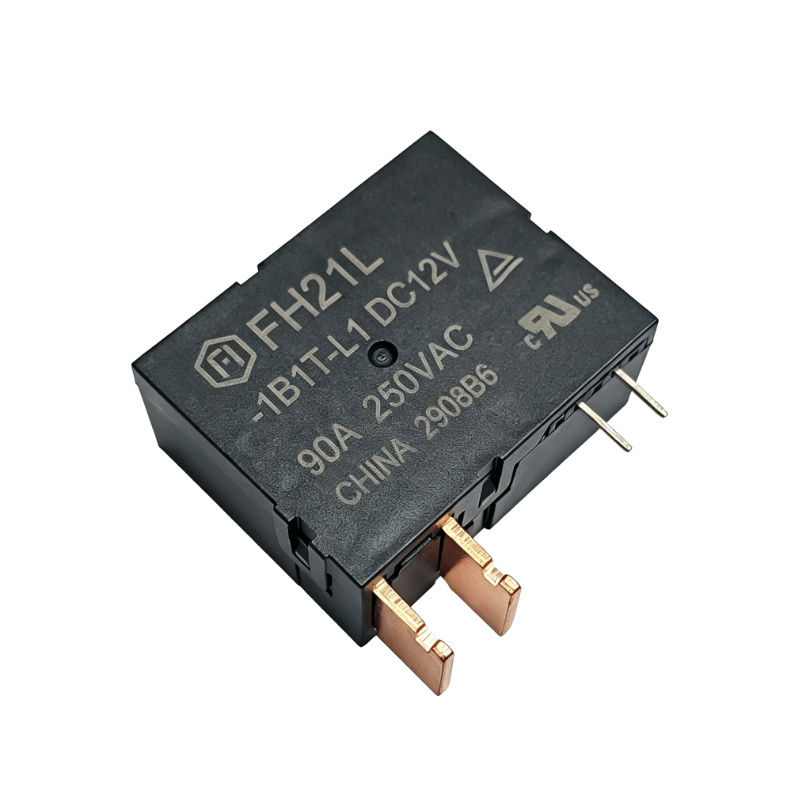
A relay consists of a coil, core, and movable armature. When current energizes the coil, a magnetic field attracts the armature, closing or opening contacts. This provides galvanic isolation between control and load circuits. Relays are designed for millions of electrical operations but are not primarily intended for overcurrent protection unless configured as protection relays paired with current transformers.
A fuse contains a calibrated metal strip or wire that melts when current exceeds its rating for a sufficient duration. Once melted, the sacrificial element creates an irreversible open circuit. Fuses offer extremely fast interruption (<1 ms for high fault currents) and high breaking capacity. However, they require replacement after each operation.
Circuit breakers use thermal (bimetal) elements for overloads and magnetic solenoids for short circuit events. Modern electronic breakers utilize CTs and microcontrollers. After tripping, they can be manually or automatic reset (in specific designs like reclosers). Breakers provide reusable protection and are often coordinated with downstream fuses or relays.
Understanding overcurrent protection requires analyzing time-current characteristics. The table below compares how each device reacts to overloads (1.1–6x rated current) and short circuits (10–100x rated current).
| Device | Overload Trip Time (2x I_n) | Short-Circuit Interruption | Current Limitation |
|---|---|---|---|
| Fuse (gG type) | 5–30 seconds | < 1 ms (fast) | Excellent (high limiting effect) |
| Thermal-magnetic CB | 4–60 seconds (adjustable) | 2–5 ms | Moderate |
| Protection Relay + CT | 0.1–10s (programmable) | Depends on associated CB | None (signal only) |
| Control Relay (no protection) | Not designed; coil may burn | Not applicable | None |
Field data shows that in motor starting applications, the combination of a fuse vs relay (using a fuse for branch protection and a relay for switching) reduces downtime by 22% compared to using only a circuit breaker, due to faster fault clearing and selective coordination.
For short circuit protection, fuses are superior in limiting peak let-through current, which protects semiconductor devices. In contrast, circuit breakers provide better coordination with upstream devices when using electronic trip units. Relays without fuses or breakers offer zero short-circuit protection.
Automatic reset capability differs radically: fuses are single-use (sacrificial element); breakers allow manual or remote reset; relays can be cycled millions of times but are not protective. Some special breaker designs (reclosers) perform automatic reset after transient faults.
A 2023 industrial survey of 150 facilities indicated that using resettable breakers instead of fuses in lighting circuits reduced annual maintenance cost by 34%. However, for high-fault locations (short-circuit currents >50 kA), fuses remain more reliable because they do not suffer from mechanical wear and their interrupting rating is inherently high.
Galvanic isolation refers to electrical separation between input and output. Relays provide inherent isolation (coil to contacts) with isolation voltage ratings from 1.5 kV to 6 kV. This allows microcontrollers to safely switch high-power loads. In contrast, fuses and circuit breakers do not provide isolation for control signals — they sit in series with the load and only interrupt current.
For current transformer (CT) based protection, a protection relay uses CT secondary current to detect faults and then trips a circuit breaker. Here, the relay and circuit breaker work as a pair: the relay provides intelligent decision-making (overcurrent, earth fault) and the breaker provides physical interruption. This combination outperforms fuses in selective coordination and remote monitoring.
When evaluating relay vs fuse for control+protection, consider that a fuse alone cannot provide isolation nor handle multiple switching cycles. A relay fusible assembly (a relay with an integrated fuse holder or a fused relay) combines control and sacrificial protection in a compact footprint, often seen in automotive and HVAC modules.
Selecting between a fuse, relay, or circuit breaker depends on seven factors: fault current magnitude, required reset time, operational cycles, space constraints, cost, isolation needs, and environmental conditions.
A concrete example: A packaging machine uses a relay to start a 5 HP motor via contactor. A fuse vs relay decision: the fuse (class J, 30A) is installed upstream to protect the cable against short circuit, while the relay controls the contactor coil. This hybrid topology reduces replacement cost because the fuse only blows during severe faults, not during everyday switching.
| Parameter | Relay (power relay) | Fuse (fast-acting) | Circuit Breaker (thermal-magnetic) |
|---|---|---|---|
| Primary role | Switching & isolation | One-time overcurrent/SC protection | Resettable fault protection |
| Response time (short-circuit) | 10–50 ms (contact transfer) | <1 ms | 2–8 ms |
| Interrupting rating | Not applicable (relay not intended to clear faults) | Up to 200 kA | 10 kA – 150 kA |
| Sacrificial element | No | Yes (fuse link) | No (contacts wear but not single-use) |
| Automatic reset | Yes (electrically held) | No | Manual or optional remote reset |
| Galvanic isolation | Yes (coil-contact) | No | No (except accessory shunt trip) |
| Life (electrical ops) | 100k – 1M | 1 operation | 4k – 15k (fault interruptions) |
| Typical cost (USD) | $2 – $50 | $0.30 – $15 | $8 – $250 |
This table clarifies that the difference between relay and fuse is not only about reset but about fundamental design intent: a relay cannot clear a fault, while a fuse sacrifices itself to do so. Meanwhile, fuse vs relay in cost per protection event favors fuses for low-severity circuits, but breakers win when repeated faults occur.
A common misunderstanding is that a relay alone provides overcurrent protection. In fact, a protection relay requires a current transformer (CT) to sense current and a circuit breaker to interrupt. The relay measures CT secondary current (typically 1A or 5A) and compares it to setpoints. If an overcurrent or short circuit is detected, the relay sends a trip signal to the breaker. This combination offers multiple advantages over fuses:
For low-voltage systems, fused protection remains simpler. But for medium-voltage switchgear (1 kV–35 kV), protection relays with CTs are mandatory because fuses cannot handle the interrupting duty or provide needed selectivity. In this context, the relay and circuit breaker pair acts as a sophisticated digital protective device, while a relay fusible approach (fuse+relay combination) is rarely used at MV levels.
Electrical safety standards (NFPA 70E, IEC 60364) require that overcurrent protective devices interrupt supply within prescribed times to prevent fire and arc flash. Fuses and circuit breakers are listed for this purpose. Relays are not recognized as primary overcurrent protection devices unless they are special overcurrent relays that trip a separate breaker or contactor.
In safety-critical circuits (emergency lighting, fire pumps), selectivity is paramount. Using a fuse upstream of a circuit breaker can create nuisance trips if not properly coordinated. Conversely, a relay vs fuse comparison for safety often recommends a fuse for simplicity and high interrupting rating, while a breaker with shunt trip offers remote emergency shutdown integration.
Arc flash hazard: Fuses exhibit lower let-through energy (I²t) than most breakers of similar rating, resulting in lower incident energy. This makes fuses attractive for high-availability systems where arc flash reduction is mandatory. However, modern electronic breakers with arc flash reduction maintenance switches are closing the gap.
Use the following flow diagram to identify the optimal device for your electrical design. The chart accounts for switching frequency, fault reset requirements, and control isolation needs.
The diagram highlights that if galvanic isolation and frequent switching are mandatory, a relay must be part of the design, complemented by a fuse or breaker for overcurrent protection. For purely protective tasks without control interface, either a fuse or circuit breaker suffices.
No. A standard relay is not designed to interrupt fault currents. Without a sacrificial element or arc-extinguishing mechanism, its contacts would weld or explode. However, a protection relay combined with a circuit breaker can detect overcurrent and command interruption, but the relay itself does not replace the fuse.
The primary difference is function: a relay switches loads on/off under normal conditions and provides isolation, whereas a circuit breaker automatically interrupts dangerous overcurrents or short circuits and can be manually reset. A relay does not provide fault protection; a breaker does.
Fuses react significantly faster, typically clearing a short circuit within 1 millisecond. A relay, even if used as a control device, cannot respond fast enough to limit fault current; its contacts would take 10–50 ms to open, leading to severe damage.
A relay fusible (or fused relay) integrates a fuse element and a relay coil/contacts in a single housing. It provides both control switching and sacrificial overcurrent protection in compact applications like automotive power distribution or HVAC control boards. The fuse protects the load and wiring, while the relay switches the circuit on/off.
Using a relay and circuit breaker in series combines intelligent control (relay) with reusable fault protection (breaker). For example, a PLC can energize a relay to start a pump, while the breaker guards against motor lockout or cable faults. This architecture is common in automation panels.
Relays can be automatically reset by de-energizing and re-energizing the coil (electrically held). Some circuit breakers, called automatic reclosers, also offer automatic reset after a short delay, but standard molded-case breakers require manual reset after tripping due to a fault.
CTs are rarely used with fuses because fuses provide no measurement output. CTs are paired with protection relays to monitor current and send trip signals to circuit breakers. Fuses are passive and do not require CTs.
Final takeaway: The debate of relay vs fuse is not about which is superior but which matches your application's requirements for resetability, isolation, speed, and control intelligence. For a deeper dive into relay selection and protection coordination, explore our resources on overcurrent protection relays and modern hybrid protective devices. Use fuses where cost and speed dominate, breakers where resettability and adjustable curves are essential, and relays whenever isolation and repeatable switching are required. Combine them for robust, fail-safe electrical systems.
If you have any questions, please fill out the contact form at the bottom of the page and contact us.

 Previous