 EN
 English
 Español
 русский
 简体中文


News
Home / News / Industry News / How Current Shunt Resistors Work: Current Sensing, Specs, and Selection Guide
Content
Picture a design review for a smart meter or a DC fast-charging station. Sooner or later, someone asks the same question: how do we measure current without breaking the circuit and without spending too much per unit on sensing? A current shunt resistor is usually the most direct answer. It is a precision low-value resistor placed in series with the load, and it converts the flowing current into a small voltage drop that an amplifier and an ADC can read. Everything else in the design — accuracy, temperature drift, layout, and cost — depends on how well that voltage drop is produced and measured.
DC and AC current sensing Micro-ohm resistance range Four-terminal Kelvin design Precision metering
The word "shunt" comes from a verb meaning to turn aside or divert. In electrical engineering, a shunt creates a bypass path, and in current sensing that path is a deliberately tiny resistance. Historically, a shunt diverted most of a large current around a sensitive galvanometer so a small fraction could be measured safely. Modern current shunt resistors follow the same idea: they sit in series with the current to be measured and produce a voltage signal proportional to it. Because their resistance is extremely low — typically from tens of micro-ohms to a few milliohms — they steal only a small amount of energy from the circuit.
A current shunt is not a general-purpose resistor. Its defining features are accuracy, stability, and low resistance. A metering-grade shunt may carry a tolerance of ±0.5% or better, a temperature coefficient in tens of parts per million per degree Celsius, and a four-terminal layout that keeps wiring resistance out of the measurement.
The operating principle is Ohm's law: the voltage across a resistor equals the current multiplied by the resistance. For the shunt, that gives:
Vsense = Iload × RshuntThe sense voltage is small by design. A 100 A current through a 50 µΩ shunt produces 5 mV, and that millivolt-level signal is a direct, linear picture of the current. The examples below show how the numbers scale.
The sense voltage is then fed to a differential amplifier, an ADC, and a microcontroller. Because the shunt is passive, the measurement is fast, linear, and free of hysteresis. The accuracy of the whole chain, however, is anchored in the shunt. If its resistance drifts with temperature, or if the connections around it add resistance, the reading drifts with it.
Compared with alternatives, a current transformer can only measure AC because it depends on a changing magnetic field. A Hall-effect sensor measures DC and provides galvanic isolation, but its linearity and offset stability are generally weaker than a precision resistor's, and it costs more at high current ratings. The shunt remains the simplest and most cost-effective choice when isolation is not required.
| Parameter | Shunt Resistor | Current Transformer | Hall-Effect Sensor |
|---|---|---|---|
| DC capability | Yes | No | Yes |
| Galvanic isolation | No | Yes | Yes |
| Output signal | Millivolt drop | Scaled current | Voltage output |
| Linearity | Excellent | Good | Moderate |
| Relative cost at high current | Low | Moderate | High |
A two-terminal shunt has a hidden weakness: the current path includes solder joints, PCB traces, and terminal hardware. If the parasitic resistance is, say, 1 mΩ while the shunt itself is only 0.5 mΩ, the measured drop is three times larger than intended — a 200 percent error. The fix is a Kelvin, or four-terminal, connection. Two terminals carry the load current; two separate terminals sense the voltage across the shunt element. Because the sense terminals carry almost no current, the resistance of their connections and traces does not affect the reading.
This is why precision shunts — including the precision current sensing components produced by Fanhar — place the sense pads directly at the resistor body. Designers who reproduce that discipline on the PCB, keeping sense traces short and paired, get the full accuracy the shunt can deliver.
When engineers compare shunts, four specifications dominate the decision: resistance value, tolerance, temperature coefficient, and load-life stability. The table below summarizes the specifications that matter most and the effect each one has on the measurement.
| Specification | Typical Range | Effect on Measurement |
|---|---|---|
| Resistance | 50 µΩ to 10 mΩ |
Sets sensitivity and burden voltage |
| Tolerance | ±0.1% to ±1% |
Direct baseline error in the reading |
| TCR | ±15 to ±75 ppm/°C |
Drift when ambient temperature changes |
| Power rating | 0.5 W to 10 W+ |
Limits continuous current before self-heating |
| Load-life stability | ≤0.5% typical |
Resistance change after rated load hours |
| Thermal EMF | <1 µV/°C in good designs |
Error in low-current DC precision signals |
| Inductance | Low-nH range | Phase error in AC or fast transients |
For DC metering, tolerance and TCR dominate the error budget. For high-frequency switching converters, inductance and thermal EMF become equally important. Low-inductance planar or multilayer shunts, such as several models in the low-loss shunt resistor range, reduce those error sources.
Shunt resistors appear wherever current must be measured for control, protection, or billing.
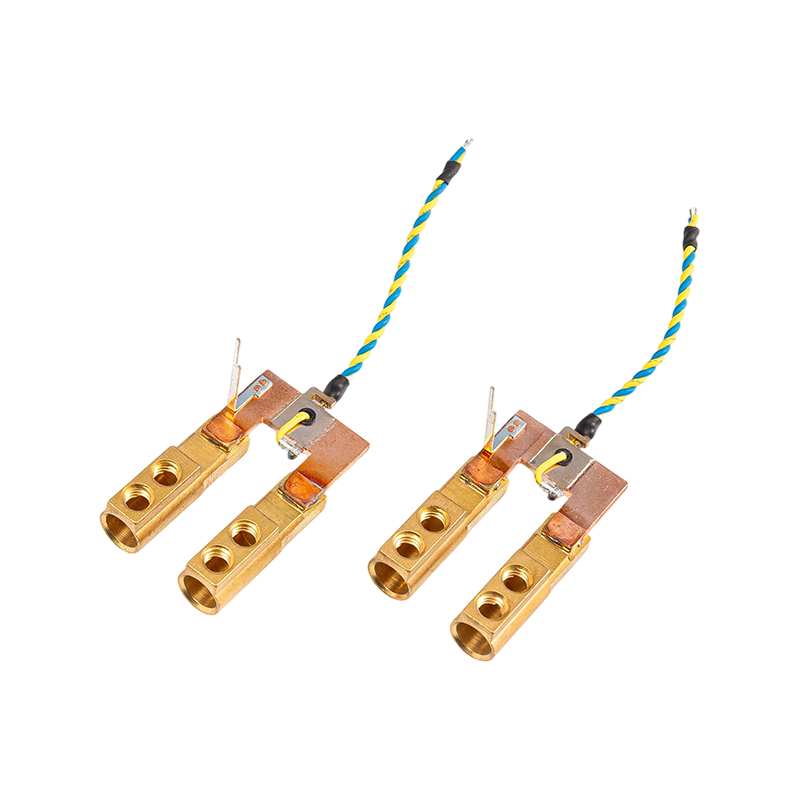
A smart meter measures household current continuously over a wide load range. The shunt sits in the live feed, and its millivolt signal is sampled by a metering IC. Meter-grade shunts need tight tolerance, low TCR, and long-term stability because metering standards require a defined accuracy class over years of service. Fanhar's FHS024 is built specifically for smart-meter measurement.
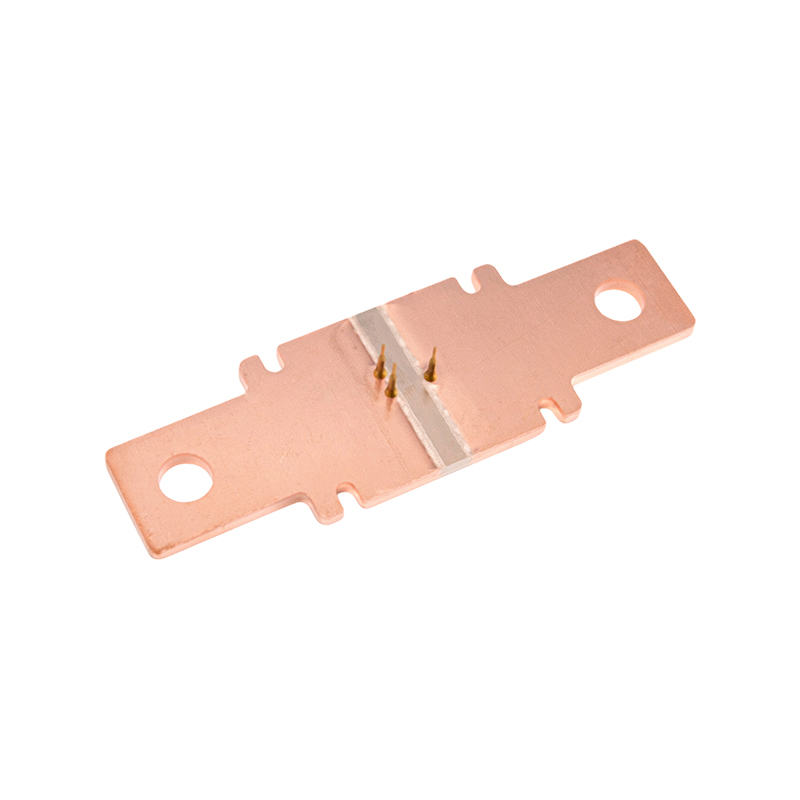 FHS-024 Precision Shunt for Smart Meter Current SensingThis low-TCR shunt is tailored for smart meter measurement, offering stable long-term readings and linear response for accurate energy monitoring. See it here because the surrounding text emphasizes meter-grade accuracy and reliability, which this component directly addresses.View Product →
Charging stations and battery systems handle DC currents from tens to hundreds of amperes. A shunt gives a stable, linear reading of that DC current without the cost and complexity of a Hall sensor. The trade-off is power loss, so high-current shunts are chosen for the lowest resistance that still produces an adequate sense voltage.
Motor drives, power supplies, and production machinery monitor phase or bus currents for closed-loop control and overcurrent protection. Industrial environments add vibration, temperature swings, and electrical noise, so shunt stability and interference immunity are essential. The FHS012 industrial-automation shunt is an example engineered for that duty.
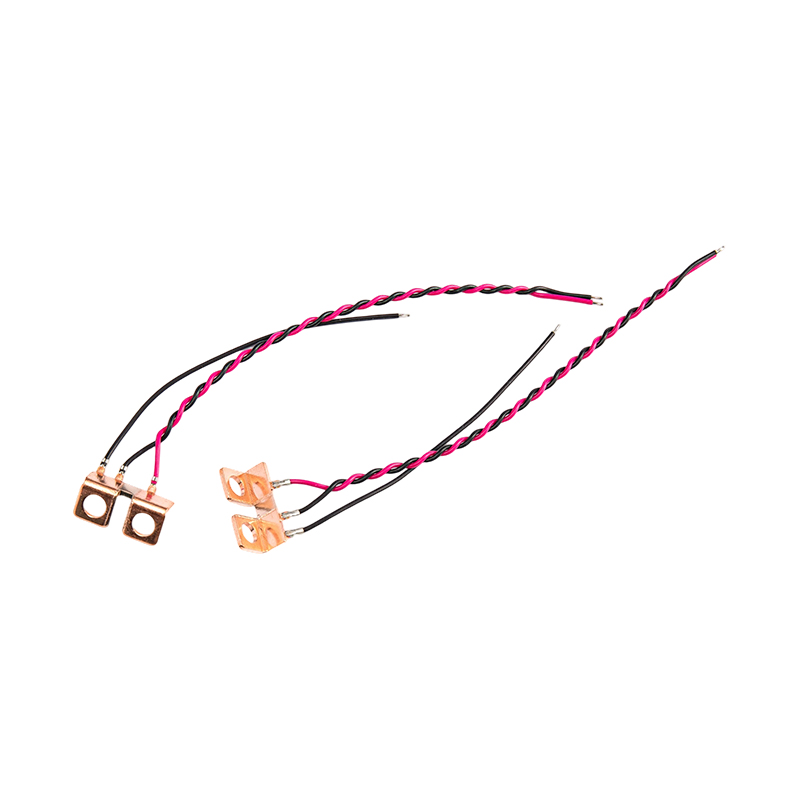 FHS-012 Industrial Automation Shunt for Motor and Drive CircuitsDesigned for motor control and power management in industrial systems, this shunt handles high-power, low-impedance current sensing with efficient heat dissipation. The preceding paragraph highlights the need for stability and noise immunity in factory environments, making this a relevant choice.View Product →
Server power supplies, telecom rectifiers, and data-center power modules use shunts to monitor input or output current. These applications need compact parts with low power consumption and high stability over the life of the equipment. Fanhar developed the FHS023 for communications-equipment power management.
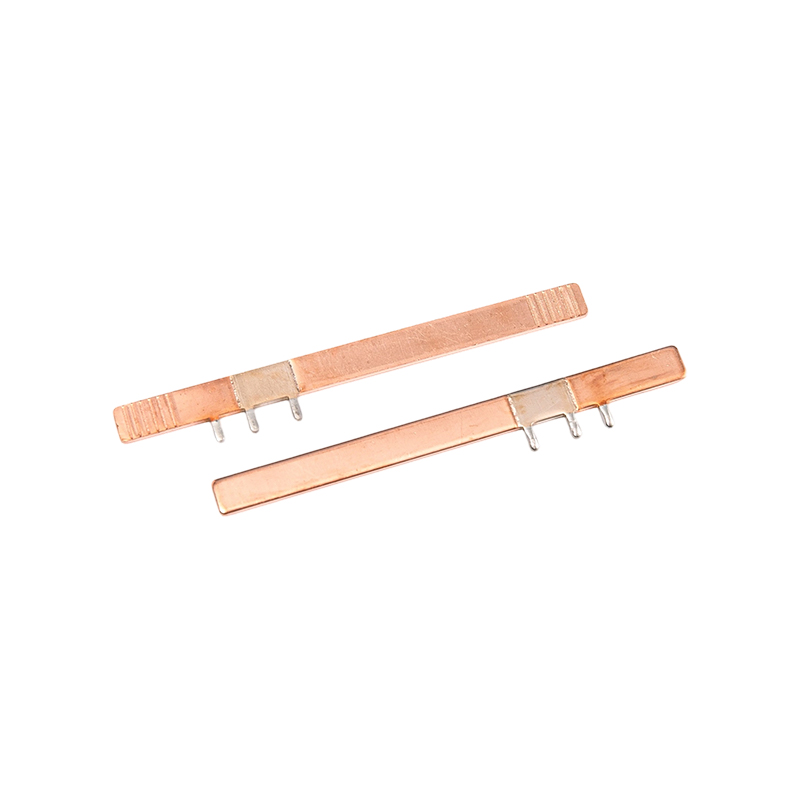 FHS-023 Communications Equipment Power Management ShuntA low-resistance shunt engineered for telecom rectifiers and data-center power modules, providing precise current monitoring with minimal power loss. Positioned after a discussion of compact, high-stability parts for communications equipment, it fits the stated requirements for reliable long-term operation.View Product →
Selection is a six-step process that starts with the current you must measure and ends with the environment the shunt will live in.
R = Vburden / Imax.P = I2R, then choose a shunt rated at least twice that value, and more for hot environments.| Design Parameter | Value | Resulting Choice |
|---|---|---|
| Maximum load current | 50 A | — |
| Burden voltage limit | 50 mV | R = 1 mΩ |
| Power dissipated | 2.5 W | Rating ≥ 5 W |
| Accuracy target | ±1%, 0 to 60°C |
Tolerance 0.5%, TCR ≤ 50 ppm/°C |
| Connection | Precision required | Four-terminal Kelvin |
A current shunt resistor measures current by converting it into a small voltage drop. It is used in smart meters, battery management systems, power supplies, EV chargers, and industrial drives.
It applies Ohm's law. The load current flows through a low-value precision resistor, producing a voltage drop V = I × R. A differential amplifier reads this voltage, and an ADC converts it to a current value.
Because it removes the resistance of terminals, solder joints, and PCB traces from the measurement. Only the voltage across the resistor element is measured, improving accuracy.
TCR is the temperature coefficient of resistance, expressed in parts per million per degree Celsius. It describes how much the resistance changes with temperature. A lower TCR keeps the shunt accurate over the operating range.
Yes. At mains frequency the shunt behaves as a low-value resistor, so it works for DC and AC. In high-frequency AC, inductance matters, and a low-inductance design is preferred.
A current shunt resistor works by turning a flowing current into a measurable voltage — simply, linearly, and at low cost. The real engineering lies in the details: resistance value, tolerance, temperature coefficient, Kelvin layout, and packaging for the target environment. Get those details right, and the shunt becomes the most reliable component in the sensing chain. Get them wrong, and the errors surface as billing inaccuracies, false protection trips, or early field failures. Fanhar's FHS series covers precision, low-inductance, and environment-resistant shunts for applications from smart-meter measurement to industrial automation and communications power management.
If you have any questions, please fill out the contact form at the bottom of the page and contact us.

 Previous